Leads Change Effectively: A Key Competency for Effective Leadership
Welcome to Monthly Best Praxis, Talent Praxis's newsletter dedicated to sharing actionable insights and proven strategies for leadership development. Each month, we dive into key topics and competencies that help leaders drive performance, align teams, and create lasting impact. In this issue, we explore how shaping a high-performance culture is essential for effective leadership.
Leads Change Effectively is the competency of navigating and driving organizational change to achieve results—measured by speed of adoption, sustained performance, and minimal disruption.
It shows up in how leaders create clarity, align stakeholders, and reinforce expectations so change translates into execution.
When done well, teams quickly understand what’s changing, why it matters, and how to act—leading to faster adoption and improved results. When done poorly, unclear direction and lack of follow-through slow progress, create resistance, and erode performance.
Achieving Success Through a Combination of Skills, Attributes, and Experience
Leads Change Effectively- Navigates and drives organizational change to achieve results.
Below are examples of skills, attributes, and experiences that support the potential for the competency. Infinite combinations of strengths in various skills, attributes, and experiences can generate success in this competency.
Examples of skills supporting:
Clear and Structured Communication – The ability to convey complex ideas in a way that creates clarity, alignment, and confidence.
Stakeholder Alignment – The ability to build buy-in, navigate differing perspectives, and align key partners around change.
Analytical Problem-Solving – The ability to assess challenges, identify root causes, and adapt approaches to maintain progress.
Examples of attributes supporting:
Resilient – Maintains focus and persistence through uncertainty and setbacks.
Adaptable – Adjusts approach as conditions evolve or new information emerges.
Confident – Provides steady direction and reassurance during times of change.
Examples of experience supporting:
Leading Organizational Change Initiatives – Driving efforts such as restructures, new systems, or strategic shifts.
Managing Through Uncertainty – Maintaining engagement and performance in ambiguous environments.
Implementing New Processes or Ways of Working – Introducing and embedding changes that improve outcomes.
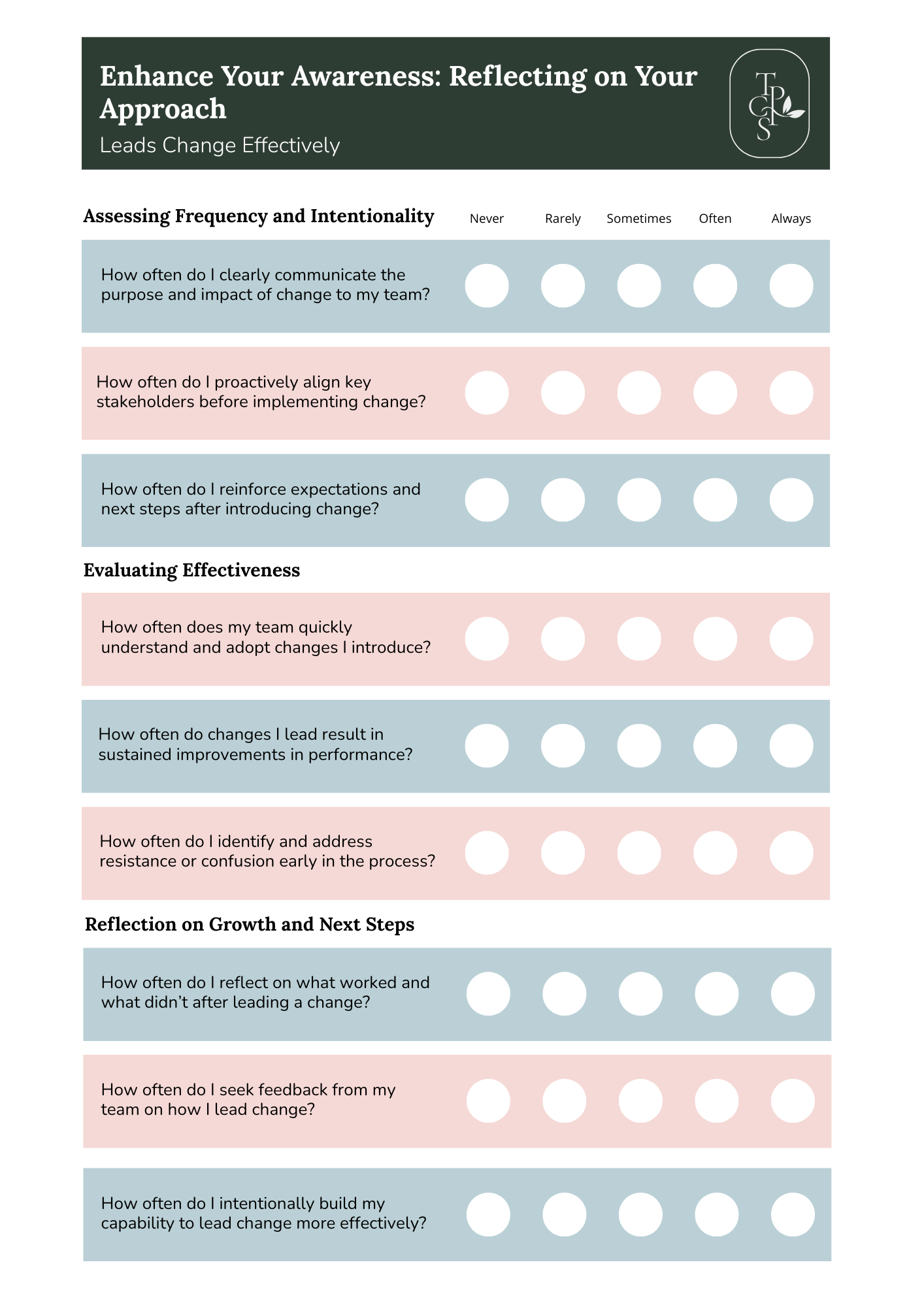
A self-assessment worksheet for leaders to reflect on how effectively they lead change effectively, using a scale from "Never" to "Always."
Practical Steps for Leaders to Develop This Competency
Define the change in simple terms before communicating it. Be clear on the purpose, what will change, and what success looks like.
Determine where alignment vs. collaboration is needed. Identify which decisions you can make independently and where input or co-creation with key stakeholders is required to ensure quality and buy-in.
Align key stakeholders early. Engage the right people to gather input, address concerns, and build ownership before rolling out the change more broadly.
Communicate the change multiple times and in different ways. Reinforce the “why,” clarify expectations, and connect it to team goals.
Identify likely resistance points in advance. Plan how you will address concerns, questions, or gaps in understanding.
Create short feedback loops. Check in regularly to assess understanding, adoption, and impact, then adjust your approach as needed.
Reinforce the change through action. Recognize behaviors that align with the change and address gaps quickly and directly.
Evaluate results and refine. After implementation, assess what worked, what didn’t, and what needs to be sustained or improved.
Common Challenges and How to Overcome Them
Driving change too top-down
Leaders make decisions in isolation and move straight to execution without involving the right people.
Overcome it: Be intentional about where collaboration is needed. Engage key stakeholders early to gather input, improve decisions, and build ownership before rollout.
—-
Overloading teams with too much change at once
Multiple changes are introduced simultaneously, creating confusion, fatigue, and reduced adoption.
Overcome it: Prioritize and sequence change. Be clear on what matters most now versus later, and focus the team on a manageable set of priorities.
—-
Lack of consistent reinforcement
Leaders communicate the change once but don’t follow through, leading to inconsistent adoption.
Overcome it: Build reinforcement into your rhythm. Use team meetings, 1:1s, and performance conversations to consistently revisit expectations and progress.
—-
Assuming alignment without confirming agreement, buy-in, or commitment
Leaders communicate change and interpret silence, a yes, or lack of pushback as alignment, without verifying true understanding or support.
—-
Overcome it: Explicitly check for three levels of alignment:
Agreement (Do people understand and agree with the decision?)
Buy-in (Do they believe in it and feel motivated to support it?)
Commitment (Do they have the clarity, tools, and resources to execute it successfully over time?)
Use direct questions and follow-up conversations to identify gaps in each area and address them early.
Connecting to Other Leadership Competencies
Leads Change Effectively reinforces several other leadership competencies by ensuring that change translates into consistent execution and results. It builds on Thinks and Works Strategically by anticipating when change is needed and aligning it to broader priorities, and Shares Information Effectively by creating clarity and reducing uncertainty throughout the process. It also strengthens Builds Trust and Relationships and Shapes a High-Performance Culture, as leaders who guide change well create environments where teams stay engaged, adaptable, and focused even during disruption.
Apply Your Learnings
Identify one current or upcoming change and clearly define the desired outcome, including what success looks like in terms of adoption and performance.
Map key stakeholders and determine where you need alignment, collaboration, or full ownership before moving forward.
Communicate the change with clarity—outline the purpose, expectations, and what it means for your team in practical terms.
Check for agreement, buy-in, and commitment by asking direct questions and identifying gaps in understanding, motivation, or resources.
Reinforce the change consistently through follow-ups, feedback, and recognition to ensure it translates into sustained performance.
Explore More
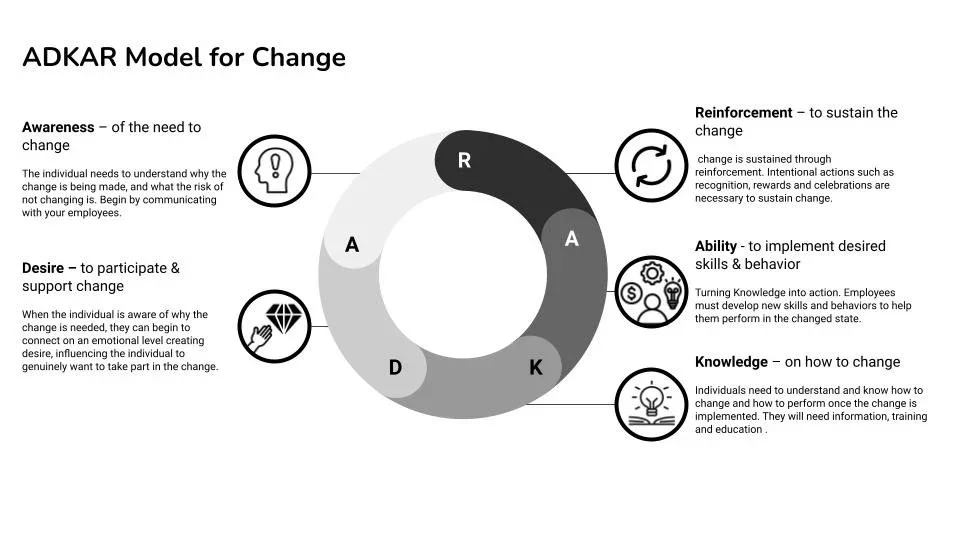
A practical framework to guide change through awareness, desire, knowledge, ability, and reinforcement—helping leaders ensure adoption and sustain results.
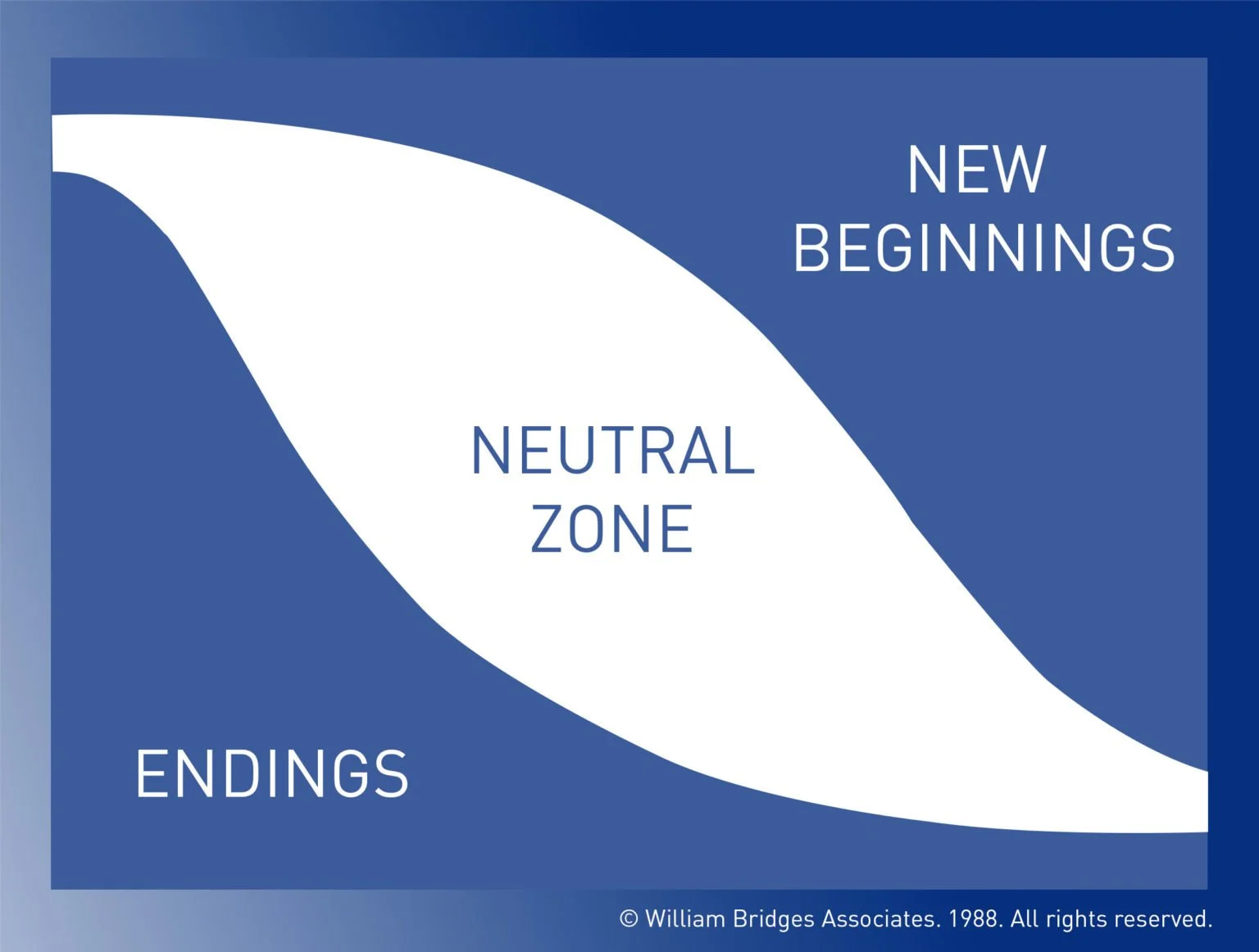
Focuses on the human side of change, helping leaders navigate endings, transitions, and new beginnings to support team adoption and engagement.
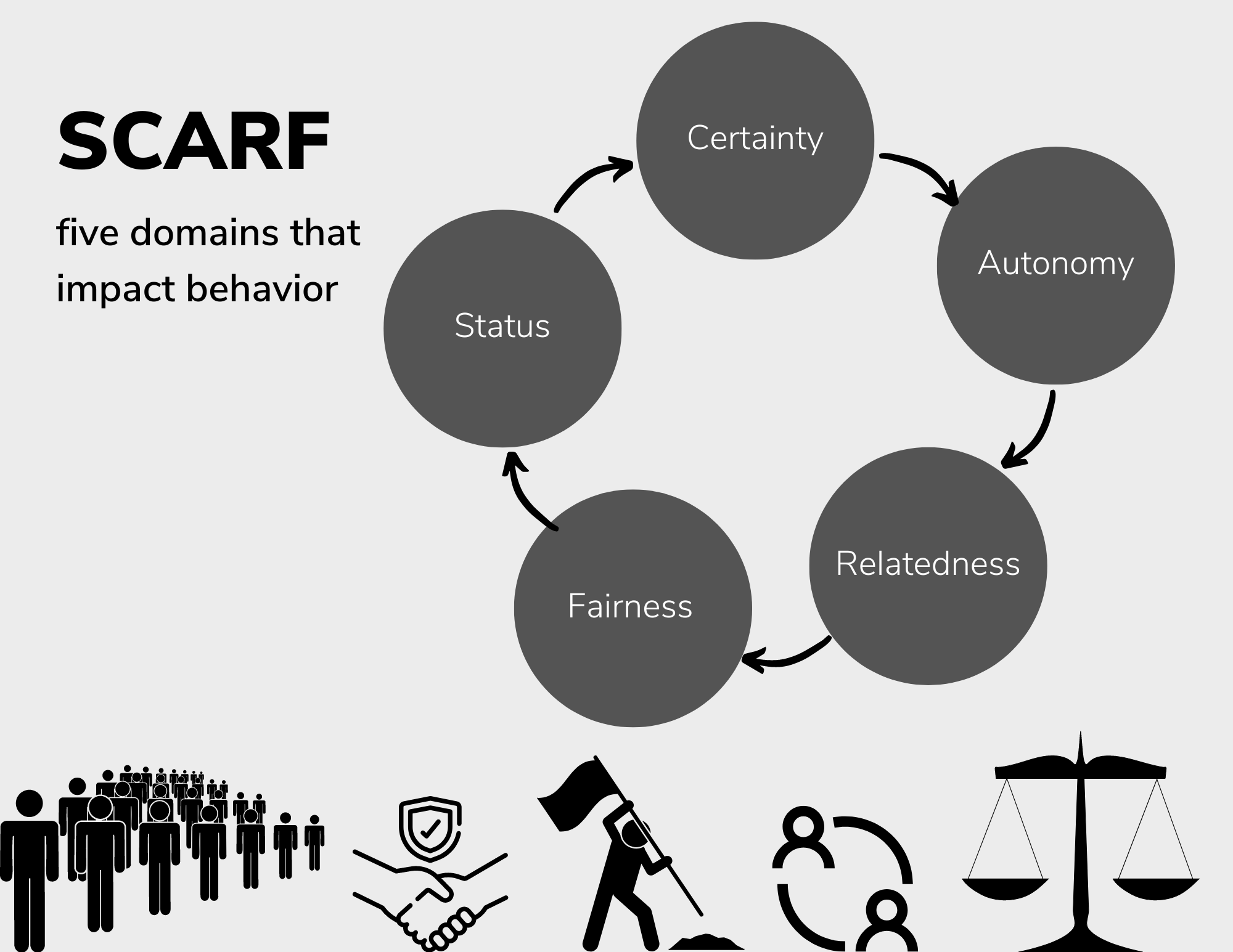
Provides insight into how status, certainty, autonomy, relatedness, and fairness impact behavior during change—useful for anticipating and addressing resistance.
Build Leadership Capability Across Your Organization
If you’re looking to go beyond individual competencies and build a consistent, scalable approach to leadership, explore our Leadership Capability Series. This program helps organizations define, develop, and embed the leadership behaviors that drive performance, alignment, and long-term success.
Leadership Capability Series
A structured approach to building leadership competencies across your organization—linking strategy, development, and execution.
https://talentpraxis.com/leadership-capability-series
Upcoming Event: Stop the Guesswork – Defining Leadership for Your Organization
Join us to learn how to clearly define leadership expectations, align your teams, and create a foundation for effective development and performance.
https://talentpraxis.com/stop-the-guesswork-defining-leadership-for-your-organization
About Talent Praxis
Cultivating Leadership Impact
Our work at Talent Praxis focuses on helping senior leaders identify the strategic behaviors that drive success, so they can lead with greater confidence, clarity, and impact. We partner with organizations to design custom leadership development programs that integrate executive coaching, assessments, and training, delivering measurable results and elevating leadership effectiveness.
Why custom leadership development programs?
Leaders define the direction and culture of an organization. Leadership development programs result in:
Increased Productivity and Performance
Higher Employee Engagement and Retention
Improved Financial Performance
As your company and market evolve, so must your leadership. Our custom leadership development programs are designed to meet your organization’s unique needs, empowering leaders with the skills to drive engagement, foster success, and deliver measurable results.