Shapes a High-Performance Culture: A Key Competency for Effective Leadership
Welcome to Monthly Best Praxis, Talent Praxis's newsletter dedicated to sharing actionable insights and proven strategies for leadership development. Each month, we dive into key topics and competencies that help leaders drive performance, align teams, and create lasting impact. In this issue, we explore how shaping a high-performance culture is essential for effective leadership.
Strong leaders don’t assume performance happens by pressure alone. Shapes a High-Performance Culture is the observable behavior of intentionally creating the conditions where teams can consistently thrive—balancing accountability with trust to drive sustainable results. When leaders practice this competency well, expectations are clear, feedback is consistent, and performance becomes the norm rather than the exception.
High performance doesn’t mean constant urgency or burnout—it means people understand what excellence looks like, feel supported in achieving it, and are held accountable to shared standards. Leaders who shape high-performance cultures reinforce both results and the behaviors that produce those results. Over time, this behavior strengthens ownership, increases engagement, and builds a culture where continuous improvement is expected—not enforced.
Achieving Success Through a Combination of Skills, Attributes, and Experience
Shapes a High-Performance Culture- creates an environment where teams thrive and succeed.
Below are examples of skills, attributes, and experiences that support the potential for the competency. Infinite combinations of strengths in various skills, attributes, and experiences can generate success in this competency.
Examples of skills supporting:
Performance Management – The ability to set clear standards, monitor progress, and address gaps while reinforcing accountability and growth.
Coaching and Development – Skill in helping individuals improve through structured feedback, reflection, and targeted development plans.
Systems Thinking – Understanding how goals, roles, incentives, and processes interact to either enable or hinder team performance.
Examples of attributes supporting:
Accountable – Holds self and others responsible for commitments and agreed-upon standards.
Consistent – Applies expectations and consequences reliably, building trust and clarity.
Empowering – Trusts team members with ownership while providing the right level of support.
Examples of experience supporting:
Leading Through Change – Experience maintaining morale and performance standards during uncertainty or transition.
Building or Scaling Teams – Experience establishing norms, expectations, and feedback rhythms that enable sustained results.
Improving Underperforming Teams – Experience diagnosing root causes of performance gaps and implementing structured improvements.
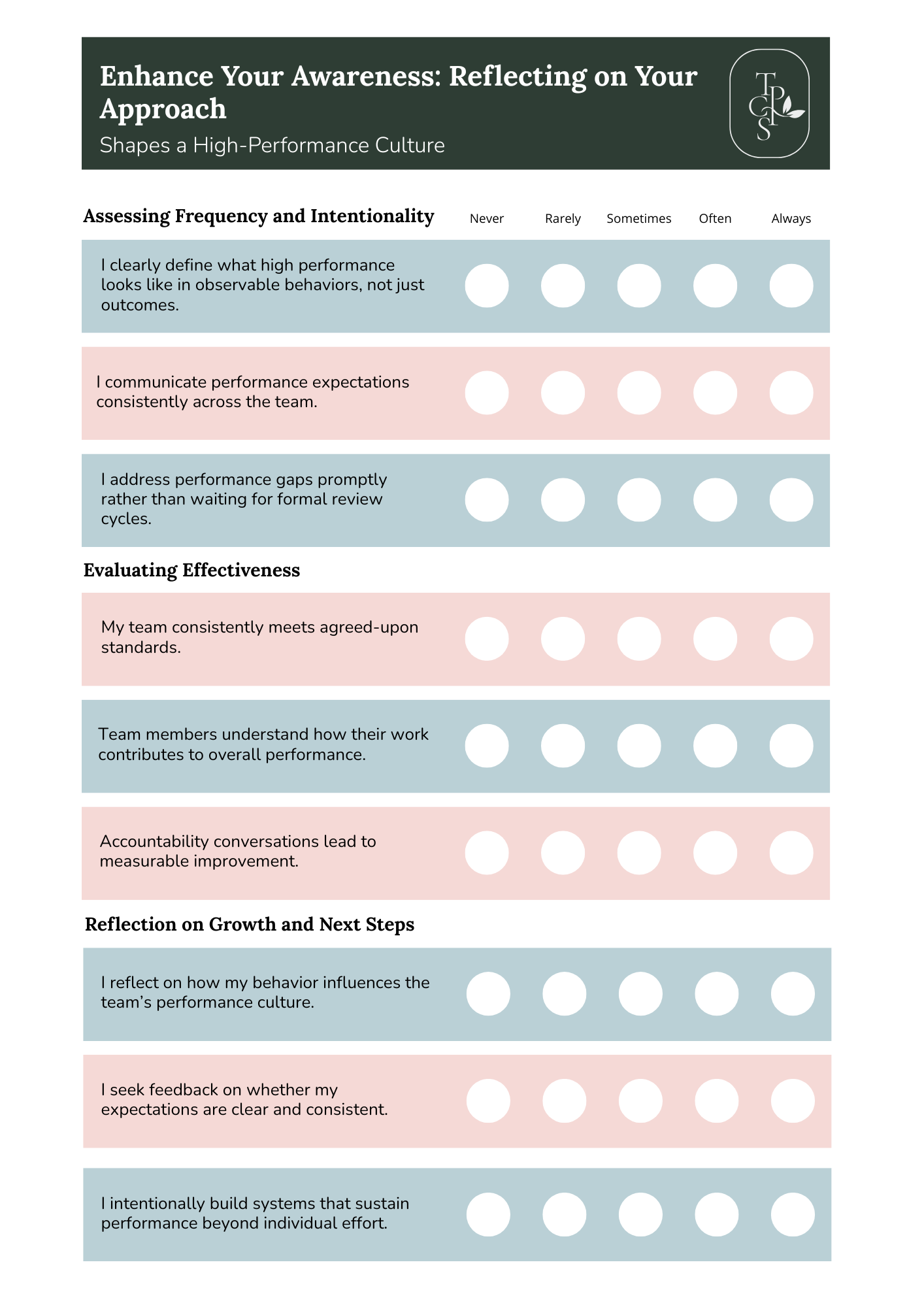
A self-assessment worksheet for leaders to reflect on how effectively they shape a high-performance culture, using a scale from "Never" to "Always."
Practical Steps for Leaders to Develop This Competency
Define and document what “high performance” means for your team in observable behaviors, quality standards, and measurable outcomes.
Align expectations with organizational goals and ensure every team member understands how their role contributes to overall performance.
Establish consistent performance rhythms, including regular 1:1s, team retrospectives, and progress reviews to reinforce standards.
Address underperformance early with clear, behavior-based feedback and a structured improvement plan.
Recognize and reward the specific behaviors that reinforce accountability, ownership, collaboration, and continuous improvement.
Common Challenges and How to Overcome Them
Confusing urgency with high performance
Leaders create constant pressure and fast pace but fail to define clear standards or sustainable expectations.
Overcome it: Define measurable outcomes and quality benchmarks. Reinforce focused execution and sustainable rhythms rather than constant acceleration.
Avoiding accountability conversations
Underperformance persists because leaders delay or soften feedback, hoping issues will self-correct.
Overcome it: Address gaps early using clear, behavior-based feedback. Partner with the team member to create a structured improvement plan with follow-up checkpoints.
Inconsistent standards across the team
Different expectations for different people create confusion and erode trust.
Overcome it: Document performance expectations and apply them consistently. Calibrate with peers or senior leaders to ensure fairness and alignment.
Rewarding results without reinforcing behaviors
Leaders celebrate outcomes but overlook how those outcomes were achieved, unintentionally reinforcing shortcuts or unhealthy norms.
Overcome it: Recognize both the results and the behaviors that produced them. Publicly reinforce collaboration, accountability, and quality standards.
Neglecting feedback loops
Without regular reflection and input, performance issues repeat and improvement stalls.
Overcome it: Build structured feedback rhythms such as retrospectives, performance check-ins, and pulse surveys to identify gaps and adjust quickly.
Connecting to Other Leadership Competencies
Shaping a high-performance culture reinforces Sets Clear and Impactful Goals by clarifying what success looks like and aligning daily execution to meaningful outcomes. It depends on Manages Performance and Accountability to ensure standards are upheld consistently, not selectively. This competency also strengthens Builds Trust and Relationships, because sustainable performance requires psychological safety alongside accountability—without trust, high standards feel punitive rather than empowering.
Apply Your Learnings
Write down three observable behaviors that define high performance on your team and share them explicitly.
Identify one performance standard you have not reinforced consistently and address it this week.
Schedule one proactive feedback conversation focused on growth, not correction.
Audit your recognition patterns—ensure you are reinforcing both results and the behaviors that drive them.
Implement one recurring feedback loop (retrospective, check-in, or performance review rhythm) to sustain continuous improvement.
Explore More
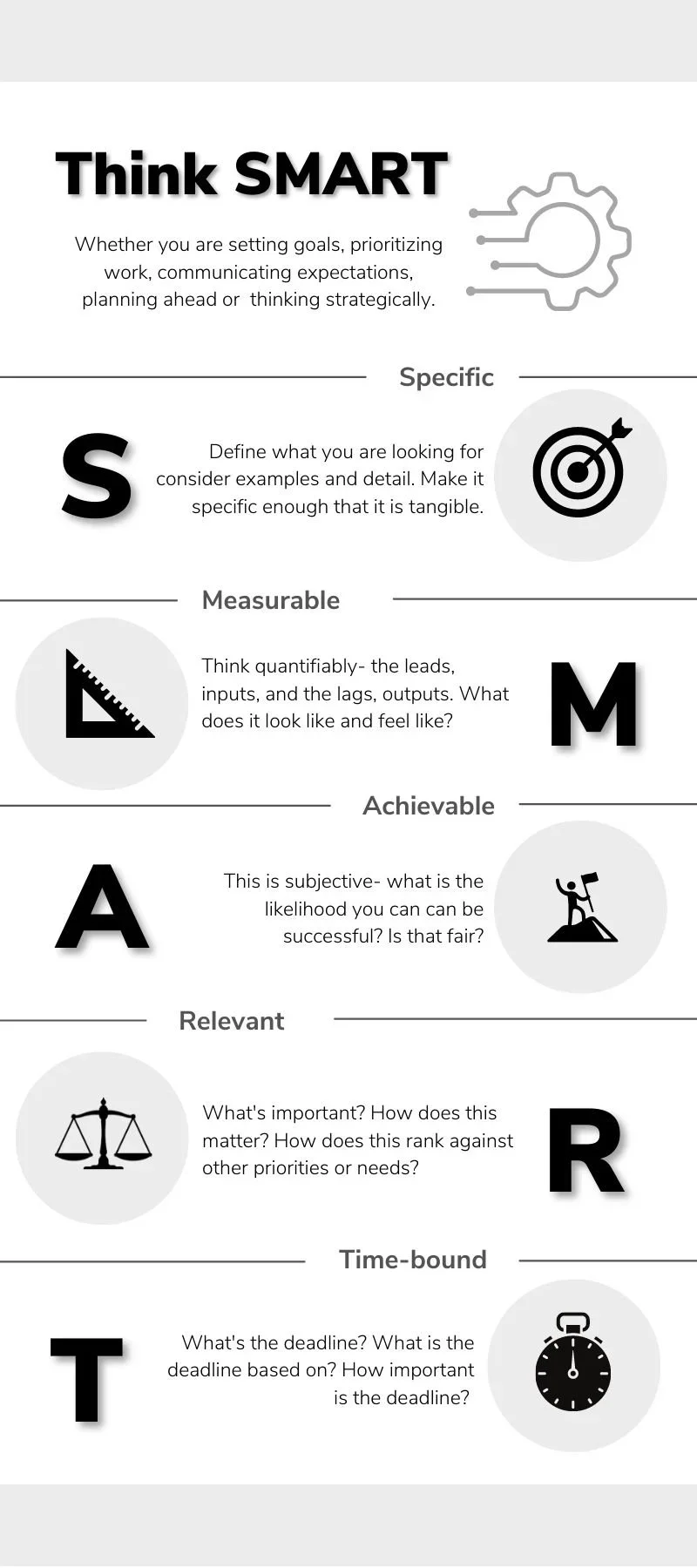
A practical framework for defining specific, measurable goals that reinforce clarity and performance standards.
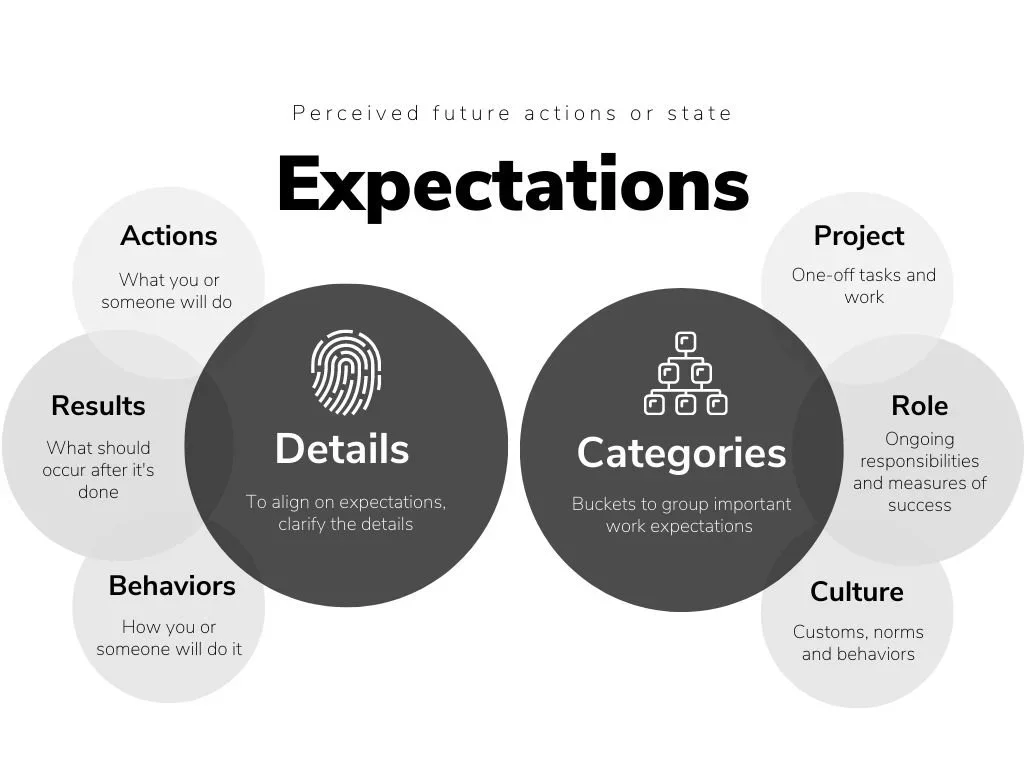
A structured approach to clarifying roles, responsibilities, and performance standards to reduce ambiguity and increase accountability.
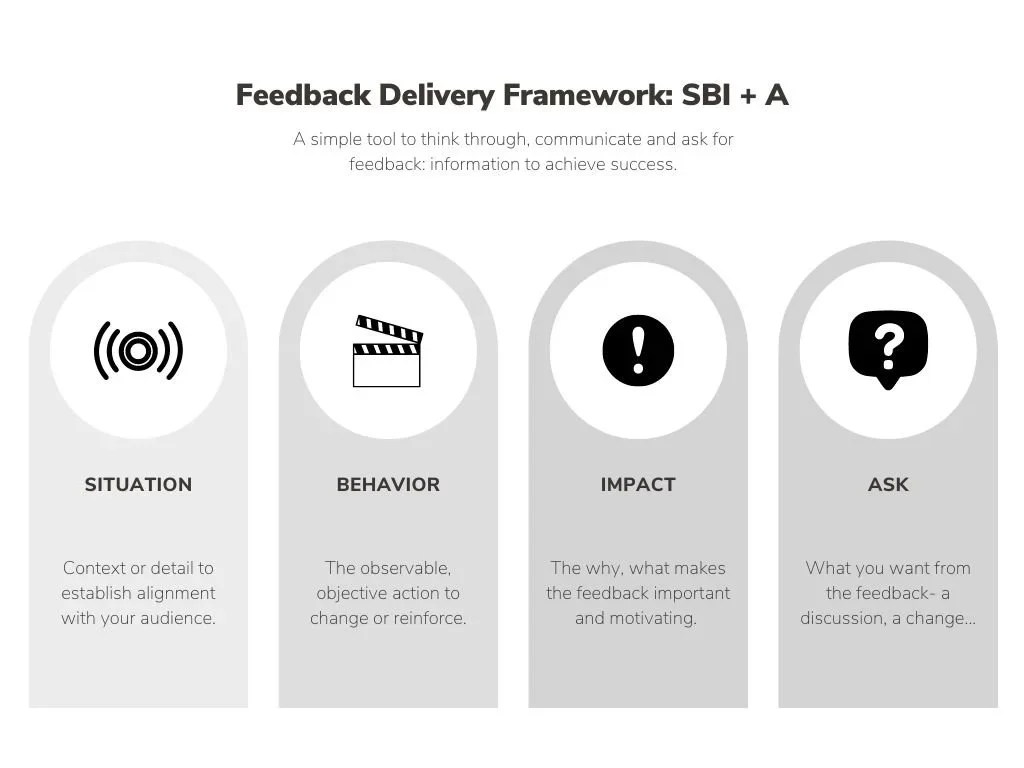
A behavior-based feedback tool to address performance gaps and reinforce high standards constructively.
About Talent Praxis
Cultivating Leadership Impact
Our work at Talent Praxis focuses on helping senior leaders identify the strategic behaviors that drive success, so they can lead with greater confidence, clarity, and impact. We partner with organizations to design custom leadership development programs that integrate executive coaching, assessments, and training, delivering measurable results and elevating leadership effectiveness.
Why custom leadership development programs?
Leaders define the direction and culture of an organization. Leadership development programs result in:
Increased Productivity and Performance
Higher Employee Engagement and Retention
Improved Financial Performance
As your company and market evolve, so must your leadership. Our custom leadership development programs are designed to meet your organization’s unique needs, empowering leaders with the skills to drive engagement, foster success, and deliver measurable results.