Establishes Clear Expectations: A Key Competency for Effective Leadership
Welcome to Monthly Best Praxis, Talent Praxis's newsletter dedicated to sharing actionable insights and proven strategies for leadership development. Each month, we dive into key topics and competencies that help leaders drive performance, align teams, and create lasting impact. In this issue, we explore how adapting your approach to the situation is essential for effective leadership.
One of the fastest ways to create confusion, frustration, and inconsistent performance is to leave expectations open to interpretation.
Leaders often assume expectations are clear because they have been discussed. However, communicating expectations requires more than assigning work or sharing goals. Effective leaders ensure team members understand what success looks like, their role in achieving it, and how progress will be measured.
Establishes Clear Expectations is the competency of communicating goals, roles, and responsibilities in a way that aligns team members and minimizes ambiguity. When expectations are clear, teams move faster, make better decisions, and spend less time navigating uncertainty.
Achieving Success Through a Combination of Skills, Attributes, and Experience
Establishes Clear Expectations- Communicates goals, roles, and responsibilities in a way that aligns team members and minimizes ambiguity.
Below are examples of skills, attributes, and experiences that support the potential for the competency. Infinite combinations of strengths in various skills, attributes, and experiences can generate success in this competency.
Examples of skills supporting:
Communication – Clearly conveys information, confirms understanding, and adapts messaging to the audience.
Goal Setting – Defines meaningful objectives and outcomes that guide effort and decision-making.
Planning and Organization – Structures work, timelines, and responsibilities to create clarity and accountability.
Examples of attributes supporting:
Clear – Communicates directly and avoids unnecessary complexity or ambiguity.
Organized – Creates structure that helps team members understand priorities and responsibilities.
Accountable – Takes ownership for ensuring expectations are communicated and understood.
Examples of experience supporting:
People Leadership – Experience managing individuals and teams with varying levels of skill and autonomy.
Project Management – Experience coordinating responsibilities, timelines, and deliverables across stakeholders.
Cross-Functional Collaboration – Experience aligning expectations across teams with different priorities and perspectives.
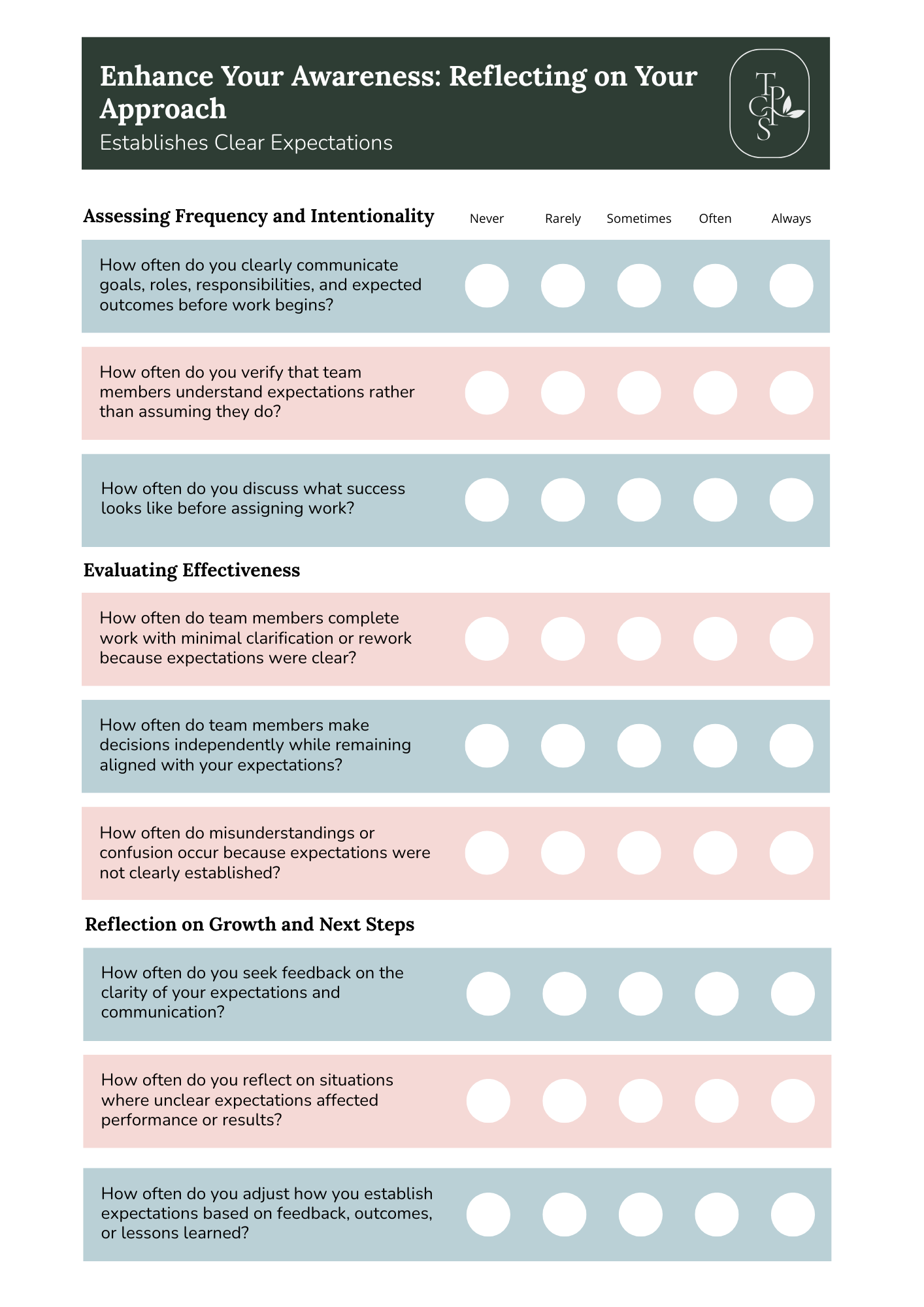
A self-assessment worksheet for leaders to reflect on how effectively they lead by example, using a scale from "Never" to "Always."
Practical Steps for Leaders to Develop This Competency
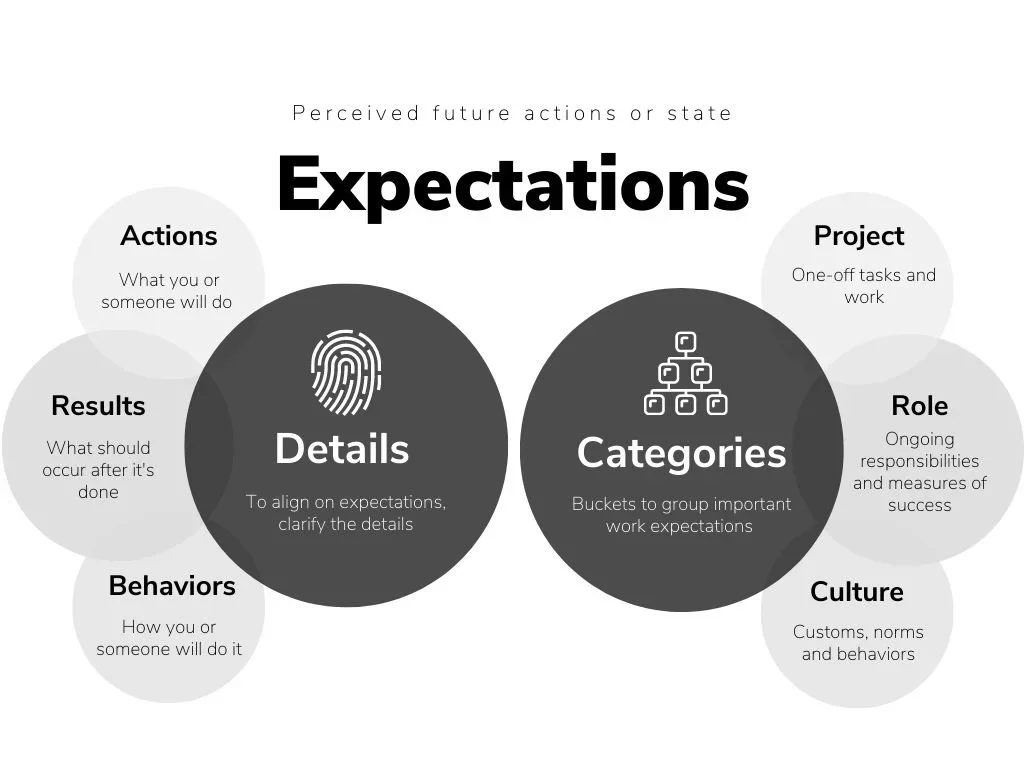
Clearly define success before assigning work. Team members should understand not only what needs to be done, but also the desired outcome and how success will be measured.
Clarify roles and responsibilities early. Alignment improves when individuals understand where they have ownership and where collaboration is required.
Communicate both the expectation and the reason behind it. Context helps team members make better decisions when situations change.
Ask team members to summarize expectations in their own words. This creates an opportunity to identify and address misunderstandings before work begins.
Revisit expectations regularly. Priorities shift, projects evolve, and expectations should be updated as circumstances change.
Common Challenges and How to Overcome Them
Assuming understanding equals agreement
Leaders often explain expectations once and assume everyone interprets them the same way.
Overcome it: Ask team members to restate priorities, responsibilities, and desired outcomes in their own words to confirm alignment.
—-
Focusing on tasks instead of outcomes
Teams may understand what to do but not why it matters or what success looks like.
Overcome it: Define expected results, measures of success, and business impact alongside task assignments.
—-
Changing priorities without resetting expectations
Work environments change quickly, but expectations are not always updated accordingly.
Overcome it: Revisit goals and responsibilities whenever priorities shift to maintain alignment.
—-
Providing too much information at once
Important expectations can get lost in lengthy discussions or messages.
Overcome it: Summarize key priorities, responsibilities, deadlines, and success measures in a concise format.
Connecting to Other Leadership Competencies
Establishing clear expectations strengthens several other leadership competencies. It supports Sets Clear and Impactful Goals by defining how success will be measured and achieved. It reinforces Shares Information Effectively through clear communication and helps Shapes a High-Performance Culture by creating accountability, consistency, and trust across the team.
Apply Your Learnings
Identify one project or responsibility where expectations may be unclear.
Clarify the desired outcome, ownership, timeline, and measures of success.
Ask those involved to confirm their understanding and identify any gaps.
Document key expectations to create alignment and accountability.
Review progress regularly and adjust expectations as priorities evolve.
Explore More
A practical framework for adjusting leadership style based on individual readiness and context.
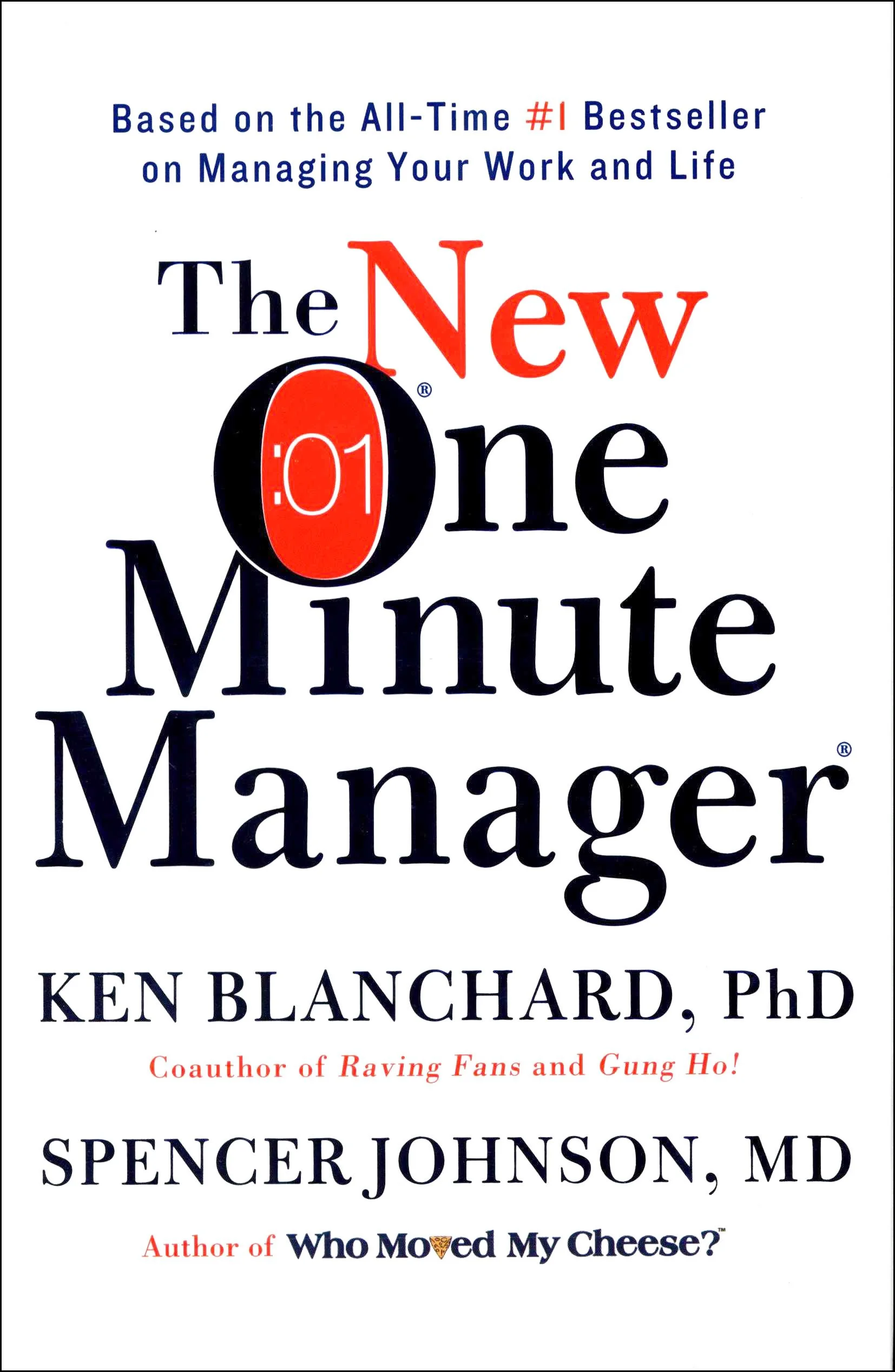
by Ken Blanchard and Spencer Johnson
A practical guide to setting clear goals and expectations that improve performance.
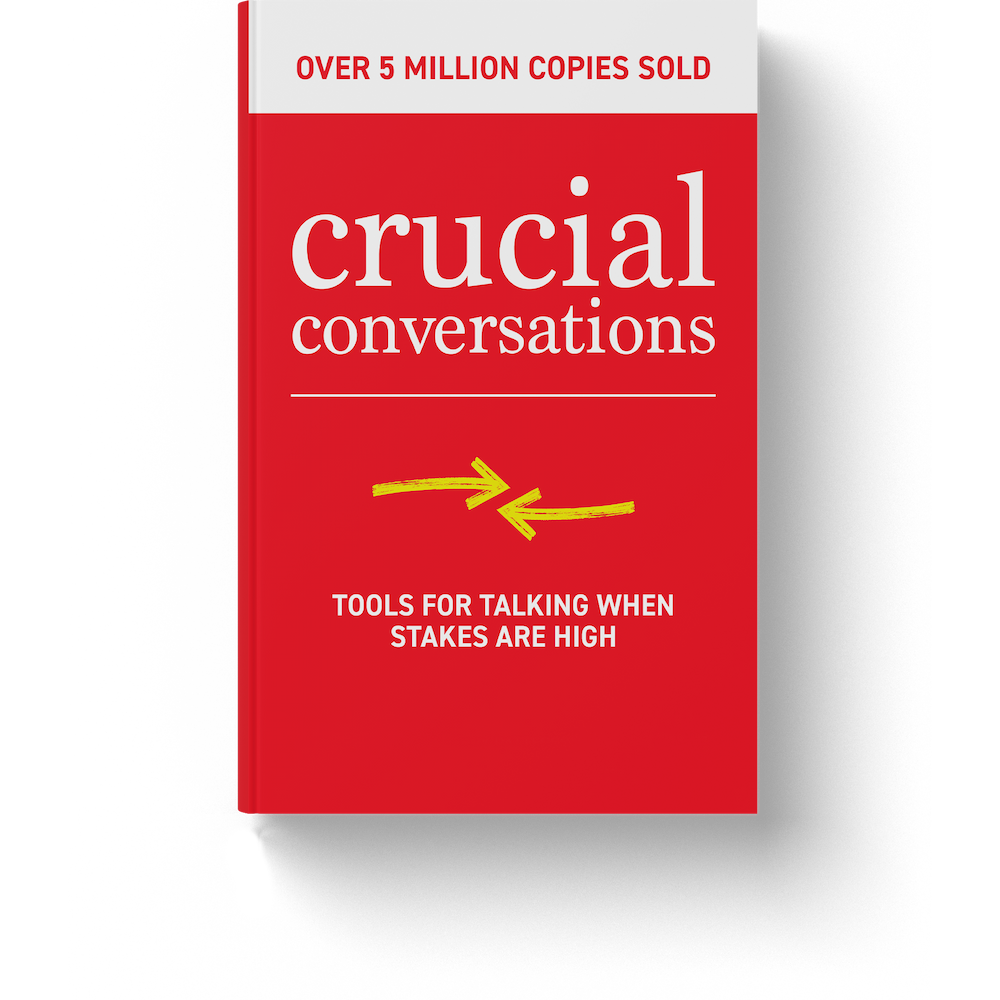
by Kerry Patterson, Joseph Grenny, Ron McMillan, and Al Switzler
Provides communication strategies for discussing expectations, accountability, and performance in high-stakes situations.
Build Leadership Capability Across Your Organization
If you’re looking to go beyond individual competencies and build a consistent, scalable approach to leadership, explore our Leadership Capability Series. This program helps organizations define, develop, and embed the leadership behaviors that drive performance, alignment, and long-term success.
Leadership Capability Series
A structured approach to building leadership competencies across your organization—linking strategy, development, and execution.
About Talent Praxis
Cultivating Leadership Impact
Our work at Talent Praxis focuses on helping senior leaders identify the strategic behaviors that drive success, so they can lead with greater confidence, clarity, and impact. We partner with organizations to design custom leadership development programs that integrate executive coaching, assessments, and training, delivering measurable results and elevating leadership effectiveness.
Why custom leadership development programs?
Leaders define the direction and culture of an organization. Leadership development programs result in:
Increased Productivity and Performance
Higher Employee Engagement and Retention
Improved Financial Performance
As your company and market evolve, so must your leadership. Our custom leadership development programs are designed to meet your organization’s unique needs, empowering leaders with the skills to drive engagement, foster success, and deliver measurable results.