Delivers and Receives Impactful Feedback: A Key Competency for Effective Leadership
Welcome to Monthly Best Praxis, Talent Praxis's newsletter dedicated to sharing actionable insights and proven strategies for leadership development. Each month, we dive into key topics and competencies that help leaders drive performance, align teams, and create lasting impact. In this issue, we explore how adapting your approach to the situation is essential for effective leadership.
Many leaders believe they are providing feedback when they say things like "Great job" or "We need to do better next time." While well-intentioned, these statements rarely provide enough information for someone to know what to continue doing or what to change.
Delivers and Receives Impactful Feedback is the competency of providing specific, actionable information that helps others be successful while actively seeking and integrating information from others. Effective leaders communicate observable behaviors, explain the impact of those behaviors, and create opportunities for learning and improvement. They also recognize that feedback is not a one-way process. They actively seek input, remain open to different perspectives, and use feedback to improve their own effectiveness.
Achieving Success Through a Combination of Skills, Attributes, and Experience
Delivers and Receives Impactful Feedback- Delivers specific, actionable information that tells others what to do to be successful while actively seeking and integrating information from others.
Below are examples of skills, attributes, and experiences that support the potential for the competency. Infinite combinations of strengths in various skills, attributes, and experiences can generate success in this competency.
Examples of skills supporting:
Communication – Clearly communicates observations, expectations, and recommendations so others understand what success looks like.
Active Listening – Seeks to understand others' perspectives and gathers information before drawing conclusions.
Coaching – Helps others reflect, identify solutions, and apply feedback to improve future performance.
Examples of attributes supporting:
Objective – Focuses on observable behaviors and facts rather than assumptions or personal judgments.
Receptive – Actively seeks feedback and remains open to learning from others.
Supportive – Approaches feedback with the intention of helping others succeed and grow.
Examples of experience supporting:
Performance Conversations – Experience discussing performance expectations, progress, and development opportunities.
Coaching and Mentoring – Experience helping others improve through guidance, reflection, and ongoing feedback.
Cross-Functional Collaboration – Experience navigating different perspectives and incorporating feedback to improve outcomes.
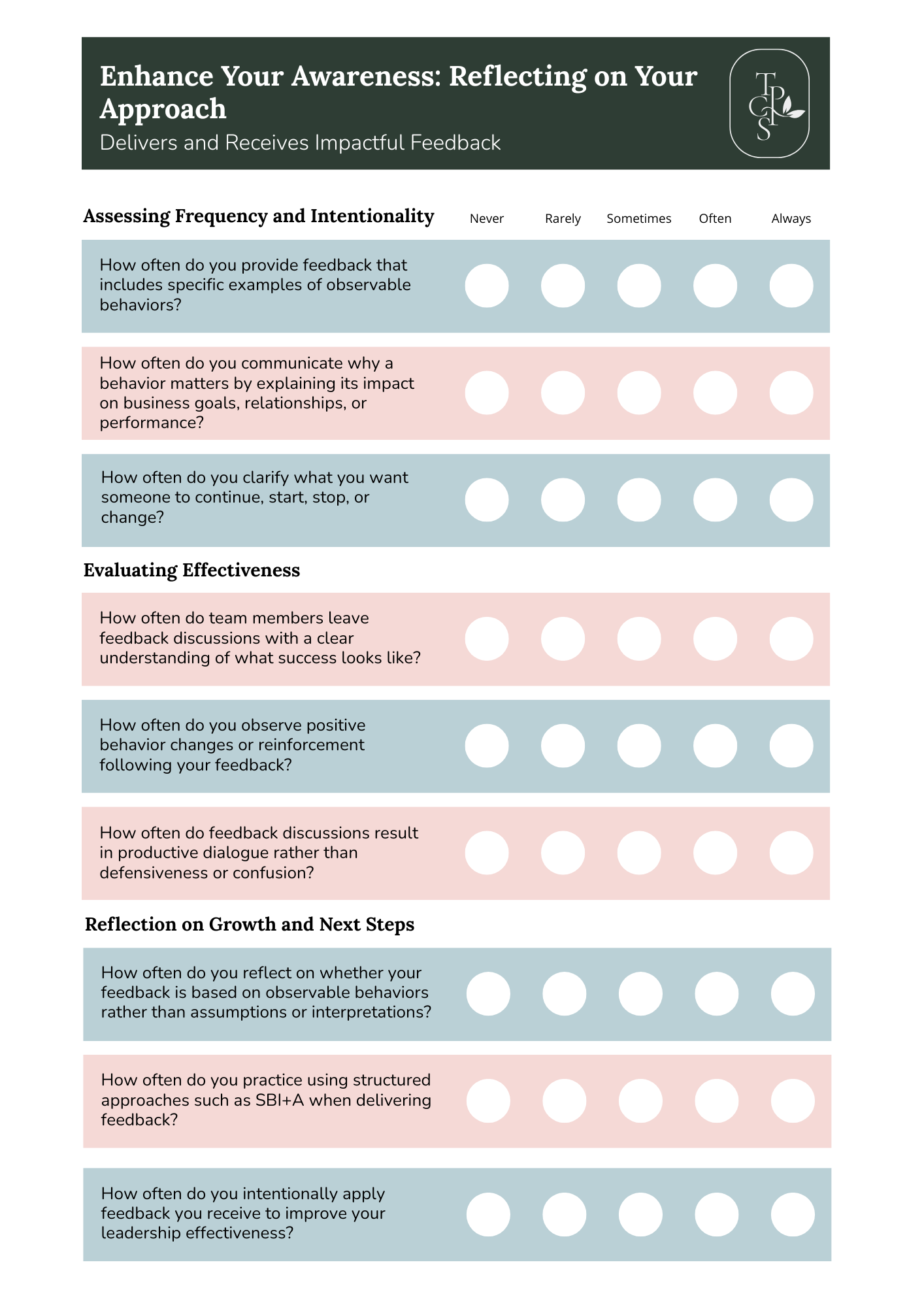
A self-assessment worksheet for leaders to reflect on how effectively they lead by example, using a scale from "Never" to "Always."
Practical Steps for Leaders to Develop This Competency
Focus on observable behaviors. Before providing feedback, ask yourself, "What would a neutral observer have seen or heard?"
Use the SBI+A framework to structure feedback and increase clarity.
Connect feedback to business goals, relationships, or performance so the importance of the feedback is clear.
Deliver feedback close to the event while details are still fresh and actionable.
Create regular opportunities for two-way feedback through one-on-ones, project retrospectives, and team discussions.
Ask for feedback as frequently as you provide it. Leaders who receive feedback well create safer environments for others to do the same.
Common Challenges and How to Overcome Them
Providing feedback that is too vague: Leaders often provide praise or criticism without enough information for someone to understand what behavior to continue or change.
Overcome it: Use SBI+A to clearly describe the situation, behavior, impact, and desired outcome. The more specific the feedback, the more actionable it becomes.
—-
Focusing on assumptions instead of observations: Feedback can quickly create resistance when it is based on motives, intentions, or personal interpretations.
Overcome it: Describe only what you observed. Focus on facts and behaviors rather than making judgments about why someone acted a certain way.
—-
Avoiding difficult feedback conversations: Many leaders delay feedback because they worry about damaging relationships or creating conflict.
Overcome it: Reframe feedback as information that helps people succeed. Timely feedback is often more supportive than waiting until issues become larger problems.
—-
Delivering feedback without a clear ask: Leaders sometimes communicate concerns without defining what should happen next.
Overcome it: Clearly communicate what you would like the person to continue, start, stop, or change. Ensure every feedback conversation has a purpose.
—-
Not seeking feedback from others: Leaders who focus only on giving feedback can miss opportunities to improve their own effectiveness.
Overcome it: Regularly ask peers, team members, and leaders what is helping them succeed and what could be improved. Model the behavior you want to see from others.
Connecting to Other Leadership Competencies
Delivering and receiving impactful feedback strengthens several other leadership and management competencies. It supports Builds Trust and Relationships by creating open, honest communication and demonstrating a commitment to growth. It reinforces Develops and Coaches Others by helping team members understand how to improve and succeed. It also contributes to Manages Performance and Accountability and Creates Feedback Loops for Continuous Improvement, ensuring teams learn, adapt, and achieve stronger results over time.
Apply Your Learnings
Identify one recent situation where you need to reinforce or redirect a behavior and prepare your feedback using SBI+A.
During your next one-on-one, ask a team member for feedback on a specific leadership approach.
Review a recent feedback conversation and evaluate whether you clearly communicated the situation, behavior, impact, and ask.
Pay attention to whether your feedback focuses on observations or assumptions and adjust accordingly.
Track one behavior change you are trying to reinforce and monitor progress over the next month.
Explore More
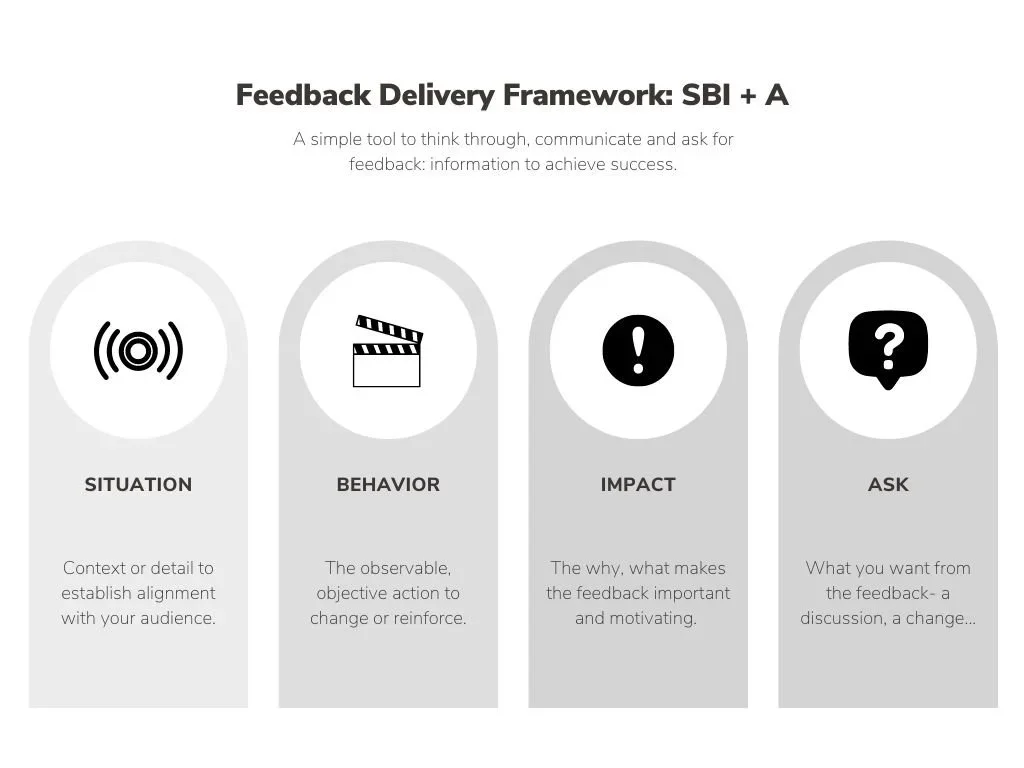
Learn a practical framework for delivering specific, objective, and actionable feedback that helps others understand what to continue, start, stop, or change.
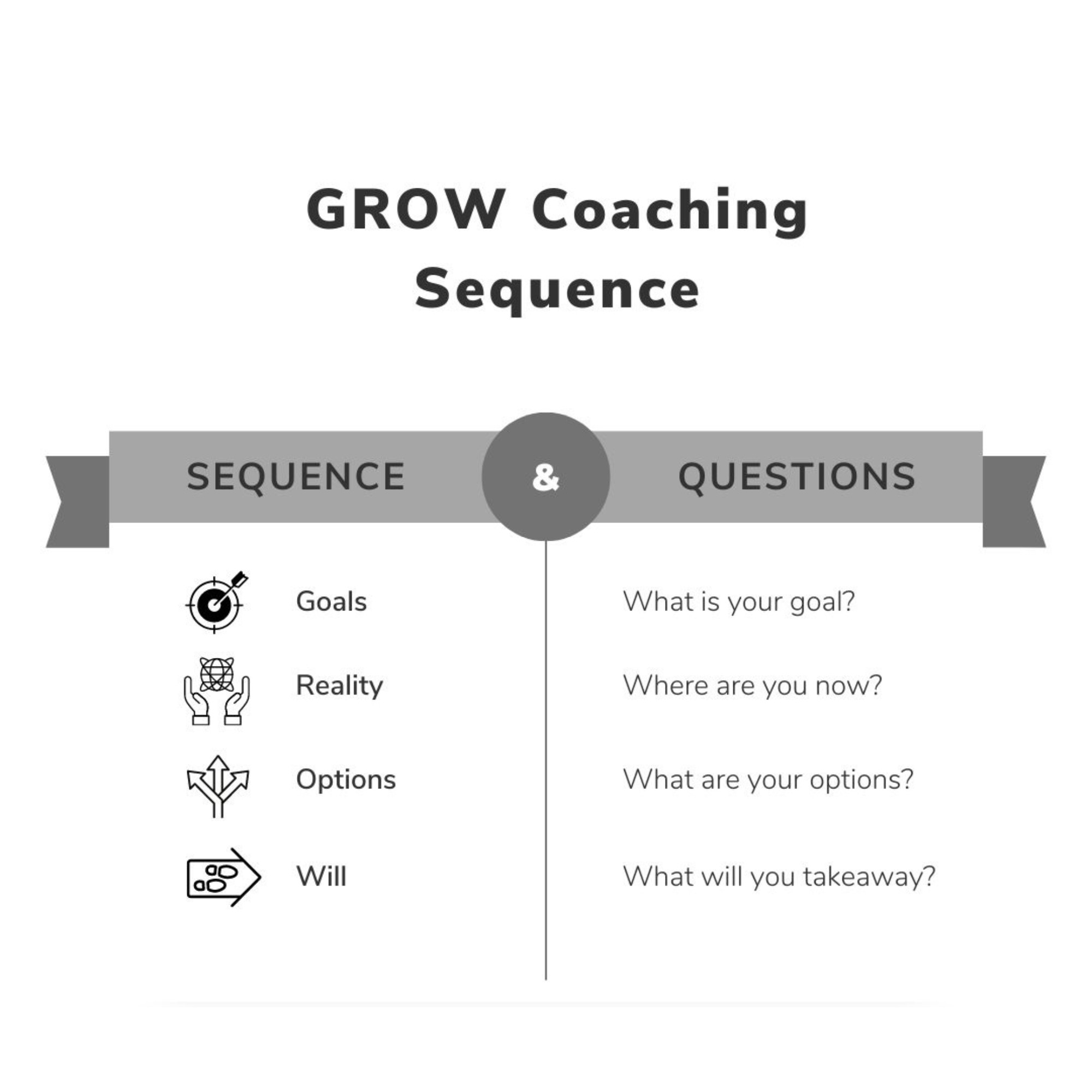
Explore techniques for combining feedback with coaching to support long-term growth and development.
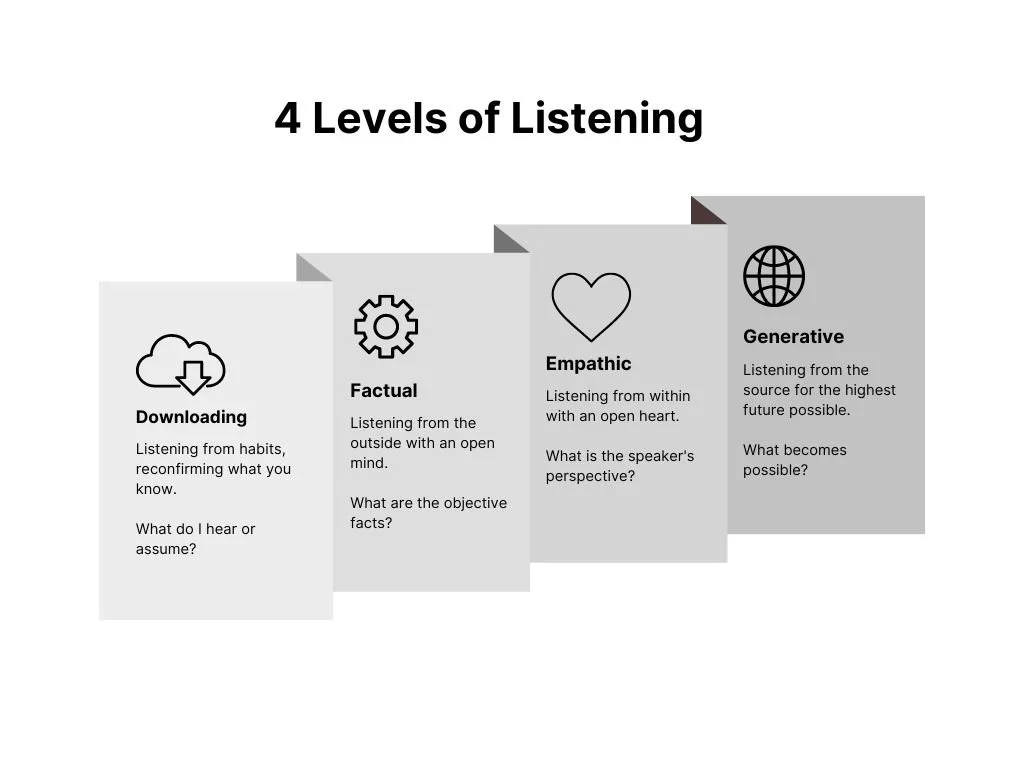
Strengthen your ability to receive feedback effectively by improving active listening and understanding different perspectives.
Build Leadership Capability Across Your Organization
If you’re looking to go beyond individual competencies and build a consistent, scalable approach to leadership, explore our Leadership Capability Series. This program helps organizations define, develop, and embed the leadership behaviors that drive performance, alignment, and long-term success.
Leadership Capability Series
A structured approach to building leadership competencies across your organization—linking strategy, development, and execution.
About Talent Praxis
Cultivating Leadership Impact
Our work at Talent Praxis focuses on helping senior leaders identify the strategic behaviors that drive success, so they can lead with greater confidence, clarity, and impact. We partner with organizations to design custom leadership development programs that integrate executive coaching, assessments, and training, delivering measurable results and elevating leadership effectiveness.
Why custom leadership development programs?
Leaders define the direction and culture of an organization. Leadership development programs result in:
Increased Productivity and Performance
Higher Employee Engagement and Retention
Improved Financial Performance
As your company and market evolve, so must your leadership. Our custom leadership development programs are designed to meet your organization’s unique needs, empowering leaders with the skills to drive engagement, foster success, and deliver measurable results.