3 Questions to Help Managers Give Better Feedback
Most feedback at work fails not because leaders don’t care, but because feedback is often unclear, overly broad, or disconnected from what actually needs to change.
Vague feedback like “be more strategic” or “step up as a leader” leaves managers frustrated and employees guessing. The result is stalled progress, repeated conversations, and unnecessary tension.
The good news: improving feedback doesn’t require a new performance system or hours of training. It requires better questions.
Below is a simple, practical framework HR, L&D, and OD leaders can use to coach managers toward clearer, more effective feedback conversations.
What Feedback Is (and Isn’t)
Effective feedback is information someone can use to be successful.
It should clearly answer:
What should change?
What should continue?
When feedback lacks specificity, people don’t know what to adjust—or what to repeat.
The Feedback Formula: SBI + Ask
This framework is grounded in the well-established Situation–Behavior–Impact (SBI) model, with an added Ask to ensure clarity and follow-through.
Situation – State the context
Behavior – Clarify what you want changed or reinforced
Impact – Explain why it matters
Ask – Be clear about what happens next
Want to talk it through?
If you’re navigating feedback challenges or thinking about how this framework could support your leaders, book a complimentary leadership development consultation.
This is a short, exploratory conversation—no pitch—focused on how to apply this at your organization.
Question 1: The Behavior
What specific behavior do you want to change or reinforce?
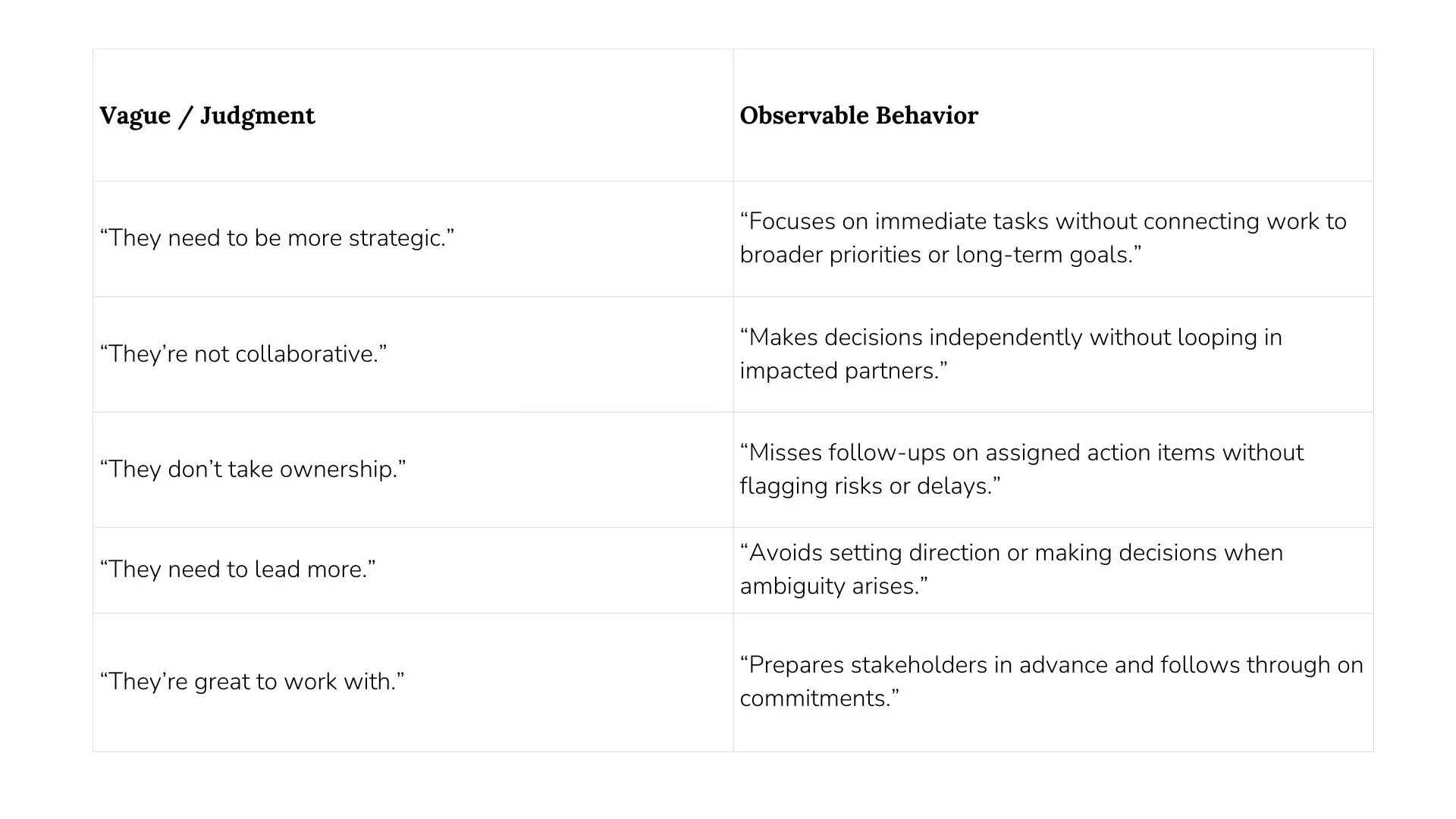
Most feedback starts with a judgment instead of a behavior.
Common examples:
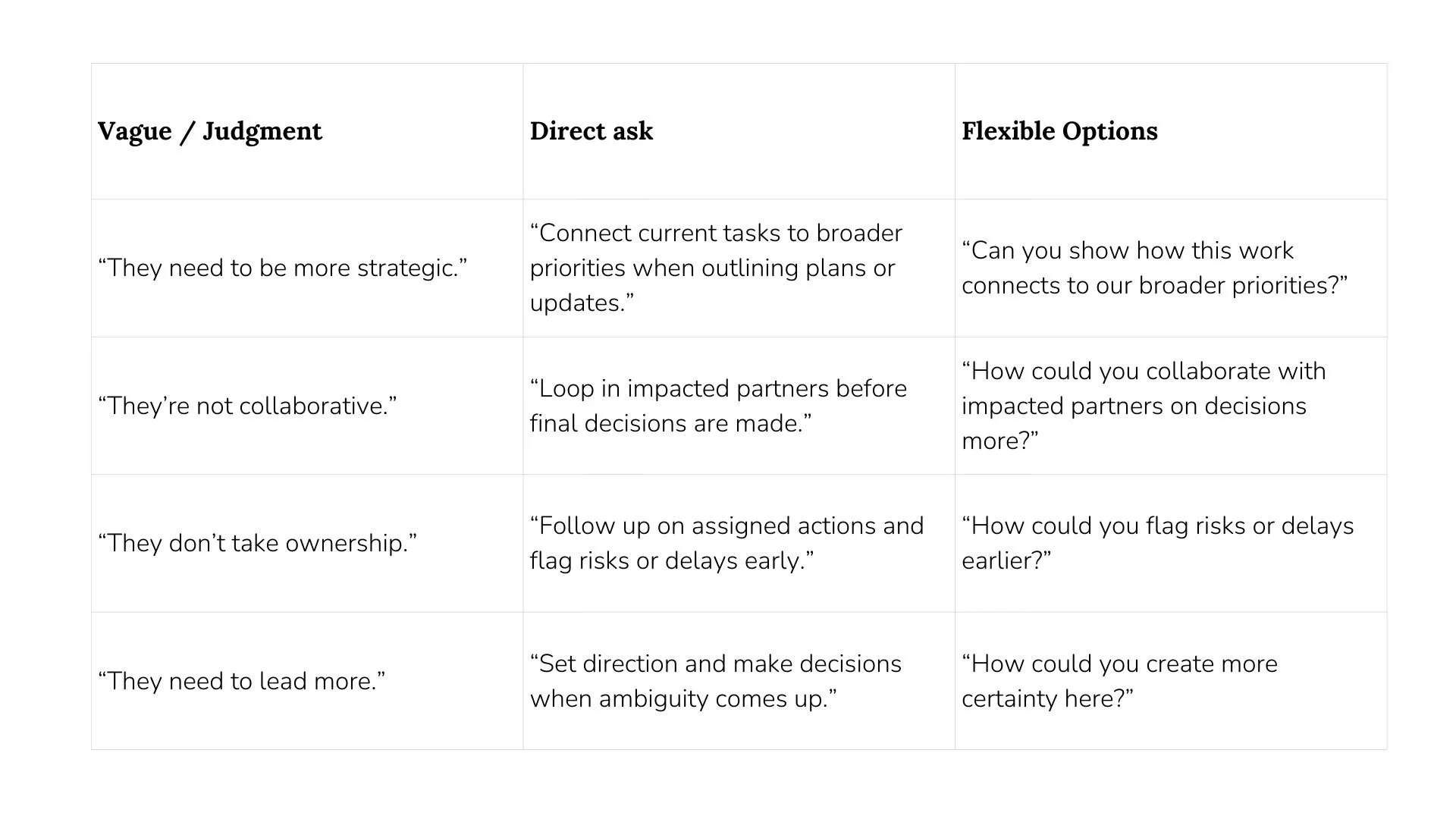
“They need to be more strategic.”
“They’re not collaborative.”
“They don’t take ownership.”
“They need to lead more.”
“They’re great to work with.”
These statements feel intuitive—but they’re not actionable.
Coach Managers to Get Specific
Helpful follow-up questions:
What specific behavior do you want to change or reinforce?
What’s one example?
What’s another example?
It sounds like you want to change or reinforce X—is that right?
Translate Judgments into Behaviors
Explore the Behavior from Different Perspectives
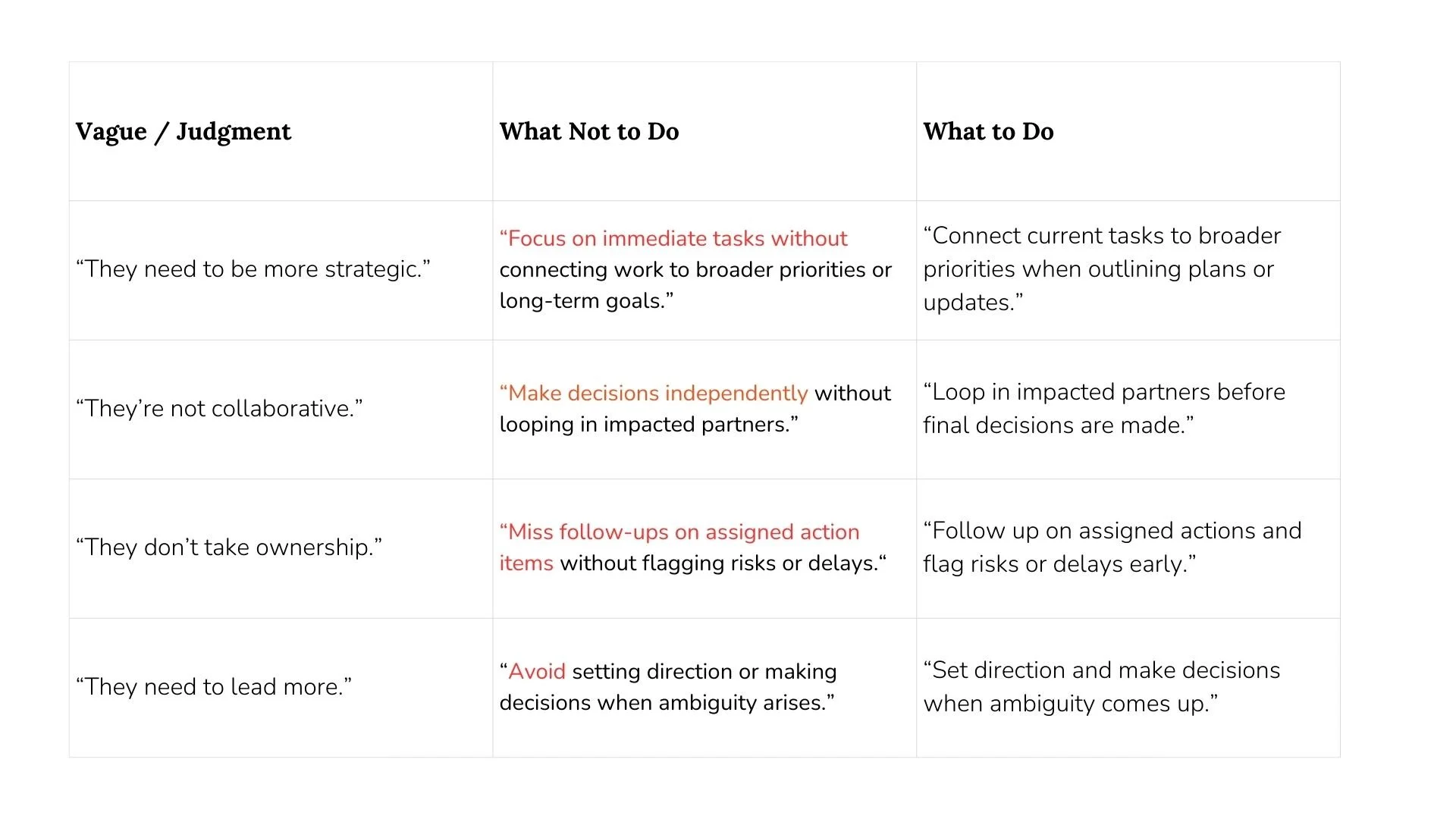
1. Coach the Shift from Stop to Start
What do you want them to do instead?
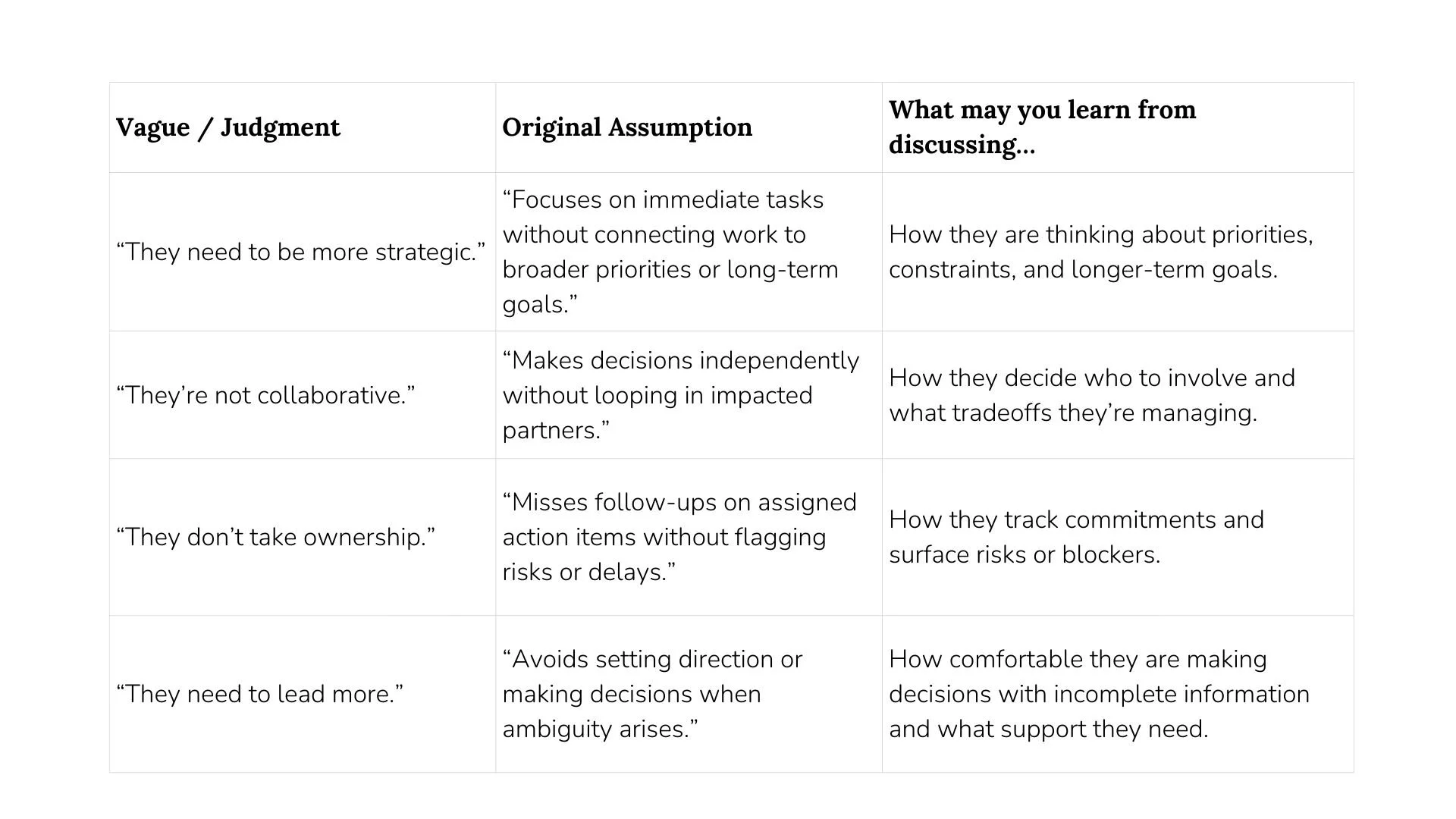
2. Coach When Observations May Be Missing
What have you actually seen—and what do you need to explore with them?
3. Coach When Direction Allows Flexibility
What matters most here, and where can you be flexible?
Question 2: The Motivator
What would motivate them to change or continue?
Feedback is more effective when the impact resonates with the person receiving it. Encourage managers to anchor feedback in the type of impact that will actually motivate sustainable change.
Three Impact Buckets
Business goals or needs
Anything that affects deadlines, objectives, or company values
→ How does this impact our goals or objectives?Relationships
Anything that affects how people work together
→ How is this affecting how you work together?Performance
Anything that affects effectiveness, growth, or success in the role
→ How does this impact their effectiveness or success?
Key coaching consideration:
What motivator is strong enough to matter—but balanced enough to be sustainable?
Not all motivators carry the same weight, and the wrong one can create unintended consequences.
For example, using a high-stakes performance motivator—like implying someone’s promotion is at risk—for a relatively small behavior change might drive short-term compliance, but it can damage trust and credibility over time.
On the other hand, leaning on a low-stakes business motivator—such as missing a single deadline that’s routinely deprioritized—often isn’t strong enough to drive meaningful change. In those cases, leaders may avoid a more important conversation about how the behavior impacts long-term performance or growth.
Effective coaching helps managers choose motivators that are:
Meaningful enough to prompt change
Proportionate to the behavior
Aligned with long-term trust and development
The goal isn’t pressure—it’s clarity that supports sustainable behavior change or reinforcement.
Question 3: The Ask
What are you asking for?
Even clear feedback stalls without a clear ask.
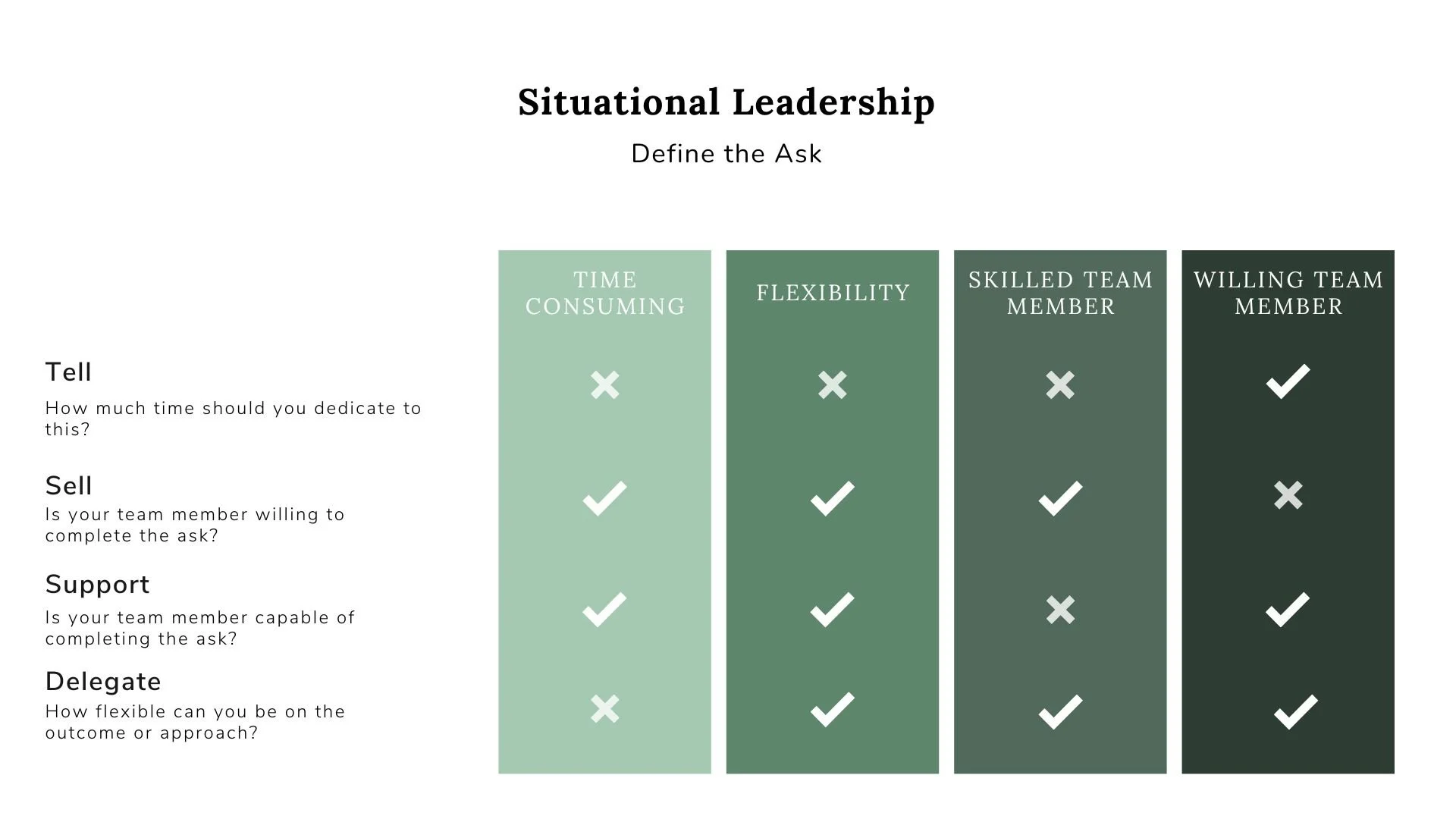
Situational Leadership defines the ask:
How much time should you spend on this?
How flexible can you be on the outcome or approach?
What’s your team member’s skill?
What’s your team member’s willingness?
Four Types of Asks
Tell – Give clear direction when instructions are simple, time is tight, or risk is high
Sell – Build understanding and buy-in, or collaborate on approach and outcome
Support – Develop skills together
Delegate – Transfer ownership
Example: “They’re not collaborative.”
Tell:
“Before making a final decision, loop in the impacted partners and incorporate their input.”Sell:
“What’s valuable about collaborating with impacted partners more when making decisions?”Support:
“Let’s talk through how you decide who to involve and the best way to bring them in.”Delegate:
“You own the decision, and I expect impacted partners to be aligned before it’s finalized.”
Question 3: The Ask — Wrapping It Up
The effectiveness of the ask depends less on the words you choose and more on how well it fits the situation.
Before settling on an ask, encourage managers to pause and consider:
How much time this change realistically requires
How flexible they can be on the approach or outcome
The team member’s current skill level
The team member’s willingness or readiness to engage
When the ask matches these factors, feedback feels fair, achievable, and clear. When it doesn’t, even well-intended feedback can create resistance, confusion, or unnecessary rework.
The goal of the ask isn’t control—it’s alignment. A well-calibrated ask sets expectations, supports progress, and makes it easier for both parties to move forward with confidence.
Bringing It All Together
When coaching managers on feedback, return to these three questions:
What specific behavior do you want to change or reinforce?
What would motivate them to change or continue?
What are you asking for—given the situation?
Strong feedback isn’t about saying more.
It’s about being clearer.
When HR and L&D leaders coach these questions consistently, feedback conversations become more focused, more effective, and far easier to sustain.
Want to talk it through?
If you’re navigating feedback challenges or thinking about how this framework could support your leaders, book a complimentary leadership development consultation.
This is a short, exploratory conversation—no pitch—focused on how to apply this at your organization.