Stop the Guesswork: Defining Leadership for Your Organization
Leadership competencies exist in every organization—whether you’ve named them or not.
Every hiring decision, promotion, and performance conversation reinforces which behaviors and results are valued. The real question isn’t whether leadership competencies exist—it’s whether they’re clearly defined and applied intentionally.
This guide walks through a practical, repeatable approach to defining and using leadership competencies so they actually support alignment, performance, and development.
Why Leadership Competencies Matter (Even When They’re Not Defined)
Leadership competencies show up every day in:
Hiring and promotion decisions
Performance feedback and evaluation
Who succeeds—and why
When competencies aren’t explicit, leaders who succeed are often those who best anticipate expectations, read informal cues, or navigate ambiguity well. That may not be the behavior you actually want to reinforce.
Well-defined competencies create predictability. They help organizations consistently identify:
What effective leadership looks like
Who is likely to succeed
What to develop next
Want to talk it through?
At Talent Praxis, we help organizations define and embed leadership competencies that actually get used—through coaching, training, and system design.
If you’d like help adapting this approach to your organization, let’s talk.
Start with Clarity: Leadership vs. Management
Before defining competencies, it’s important to clarify what you mean by leadership and management.
Example definitions (not prescriptions):
Leadership: Influencing, inspiring, and motivating people to achieve shared objectives
Management: Organizing people, processes, and resources to execute plans effectively
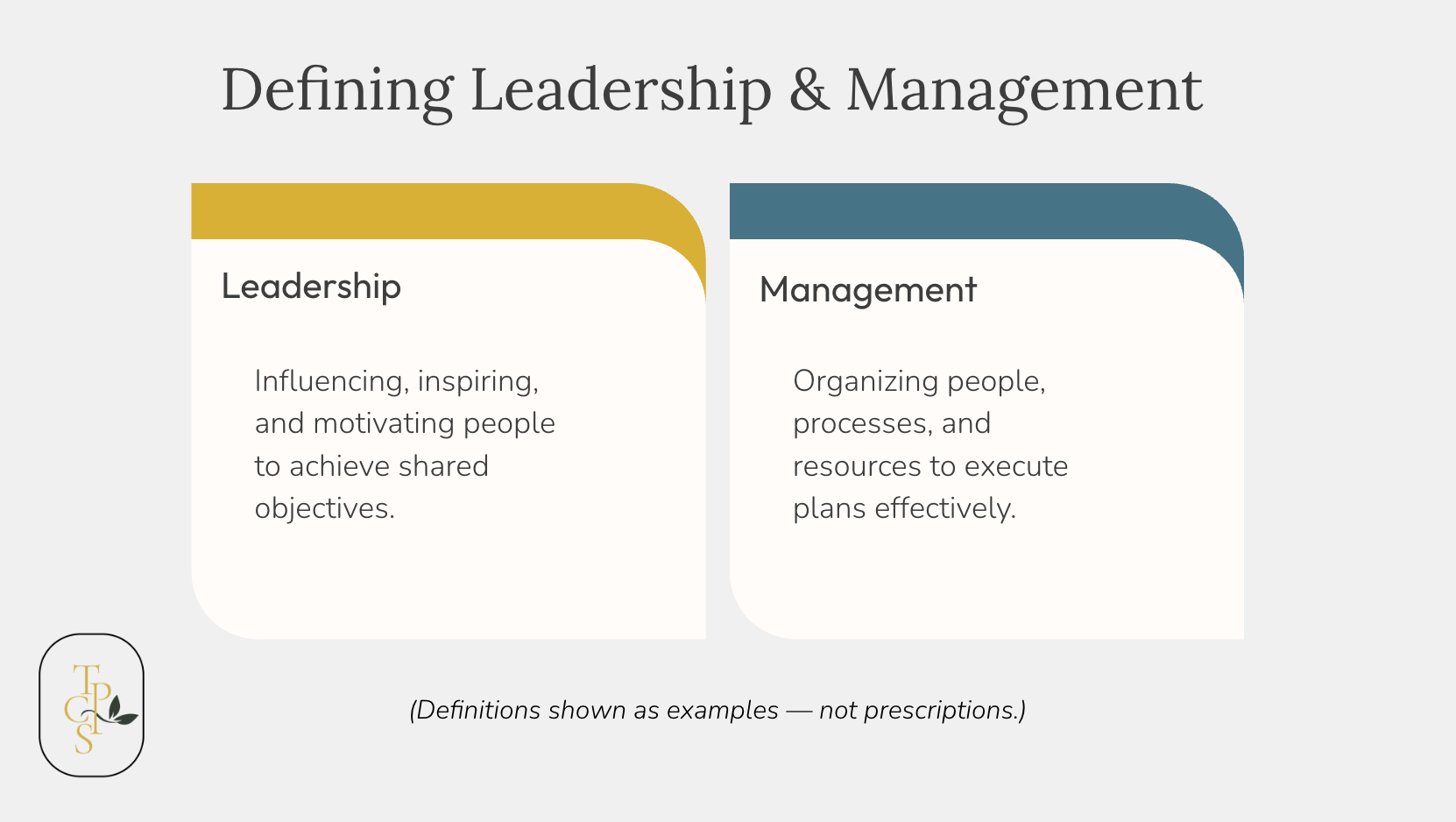
Whether your organization separates or combines these concepts directly shapes the competencies you create. Some roles require more leadership behaviors; others require stronger management behaviors. Clear definitions allow you to ask better questions and design more relevant competencies.
To define competencies, start by defining leadership and/ or management for your organization.
What a Competency Is (and What It’s Not)
A common reason competency frameworks fail is that they blur key distinctions.
Competencies are:
Observable patterns of behavior
How the work is done
Competencies are not the same as:
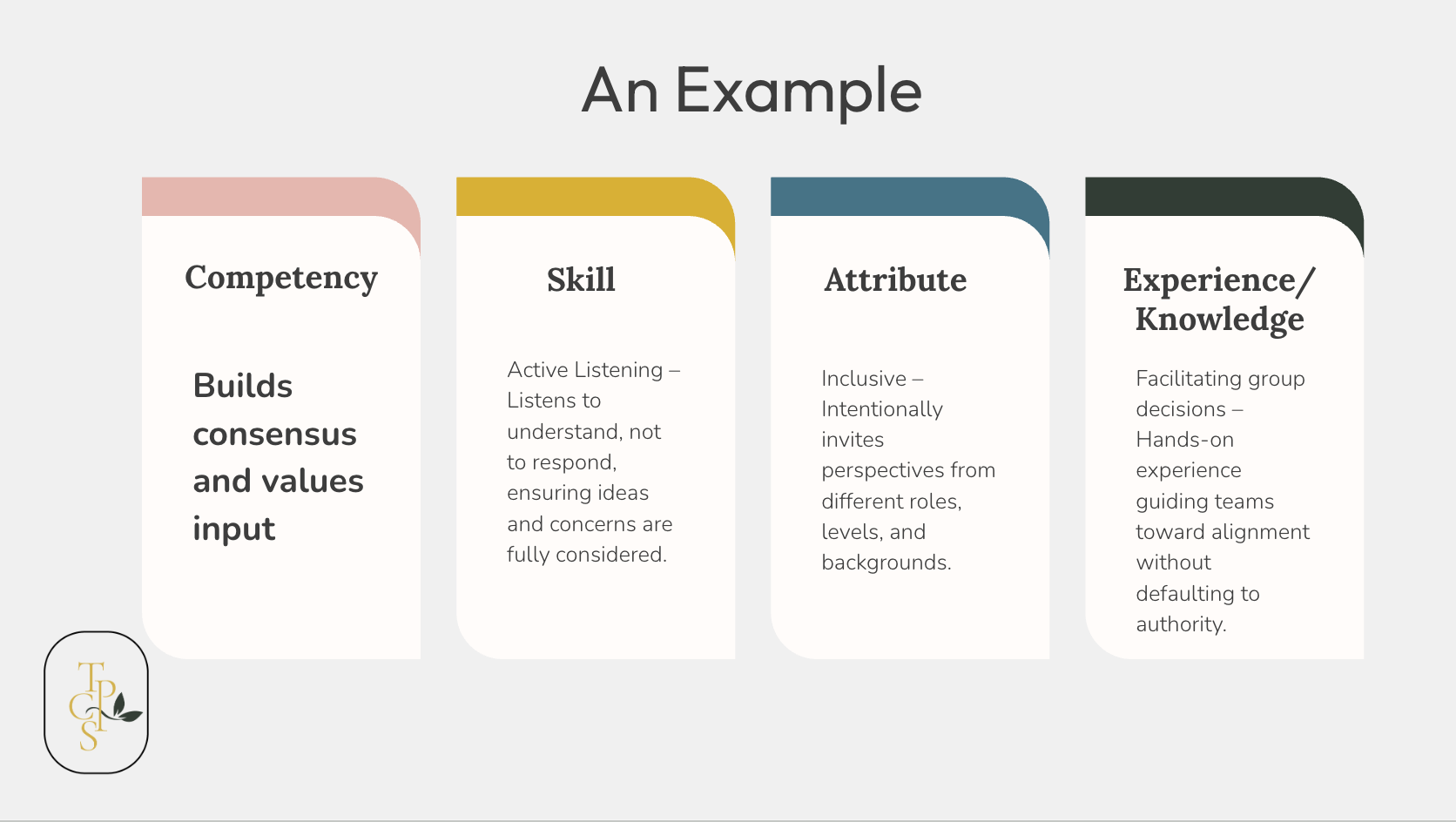
Skills: Capabilities someone uses (e.g., active listening)
Attributes: Personal qualities (e.g., inclusive, decisive)
Knowledge/Experience: Information or expertise gained over time
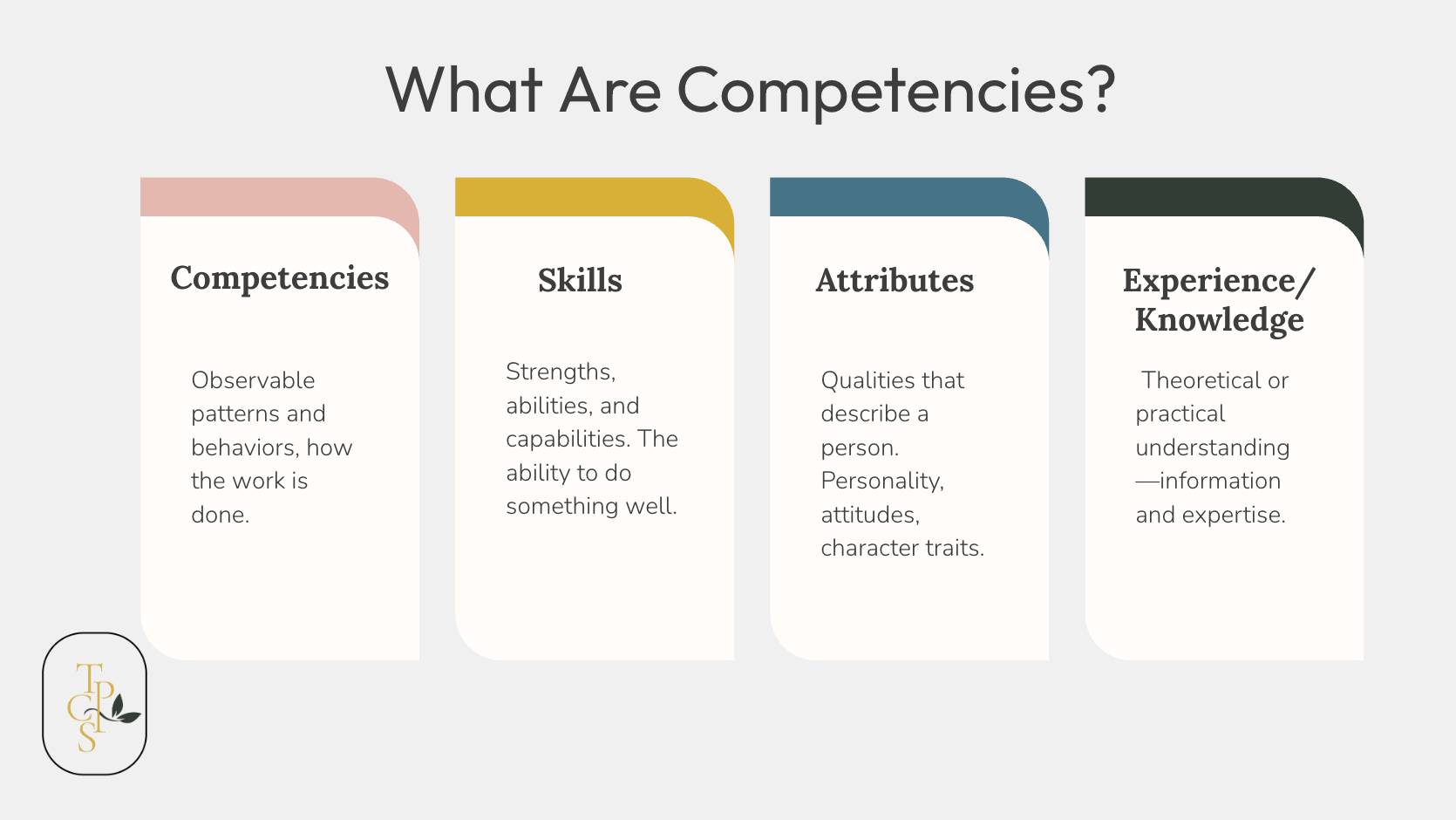
Leaders can draw from countless combinations of skills, attributes, and experience to execute the same competency. That flexibility is what makes competency-based leadership scalable.
Pressure-Test Competencies Using SMART
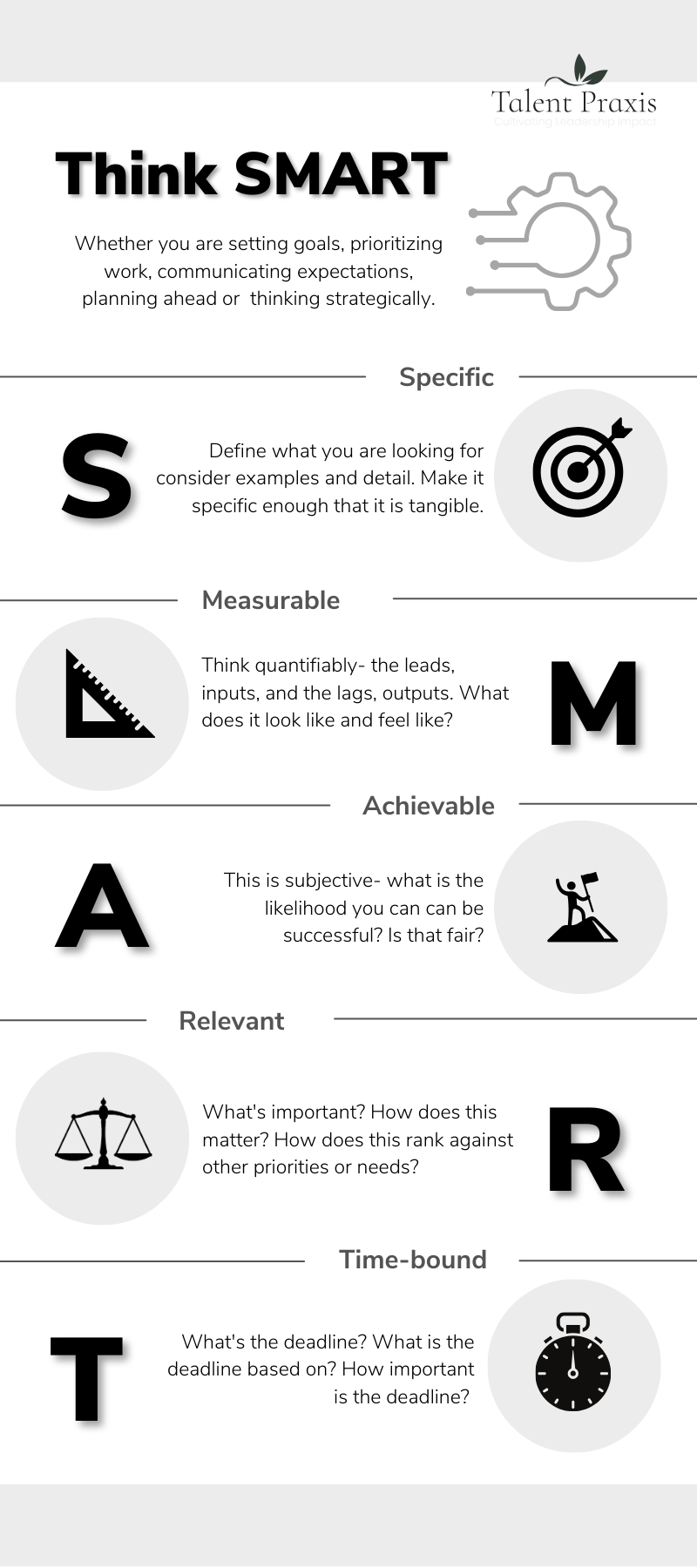
SMART isn’t just for goals—it’s a useful way to validate whether a competency is practical and usable.
Specific: Do We Mean the Same Thing?
If you asked several leaders for examples of the competency, would their answers align?
Example: “Collaborates with stakeholders”
In some organizations, collaboration is clearly defined and reinforced. In others, it means very different things to different leaders.
Specificity creates shared understanding.
Measurable: Can We See It Happening?
Measurable doesn’t mean numeric—it means observable.
Example competency: Builds trust with the team
Observable behaviors might include:
Following through on commitments
Addressing issues directly
Sharing context behind decisions
If leaders can’t name concrete examples of how they’re practicing the behavior, the competency is too vague.
Achievable: Is It a Behavior or an Outcome?
Competencies must be within a leader’s control.
Outcomes like meets deadlines or improves team performance matter—but they’re results, not behaviors.
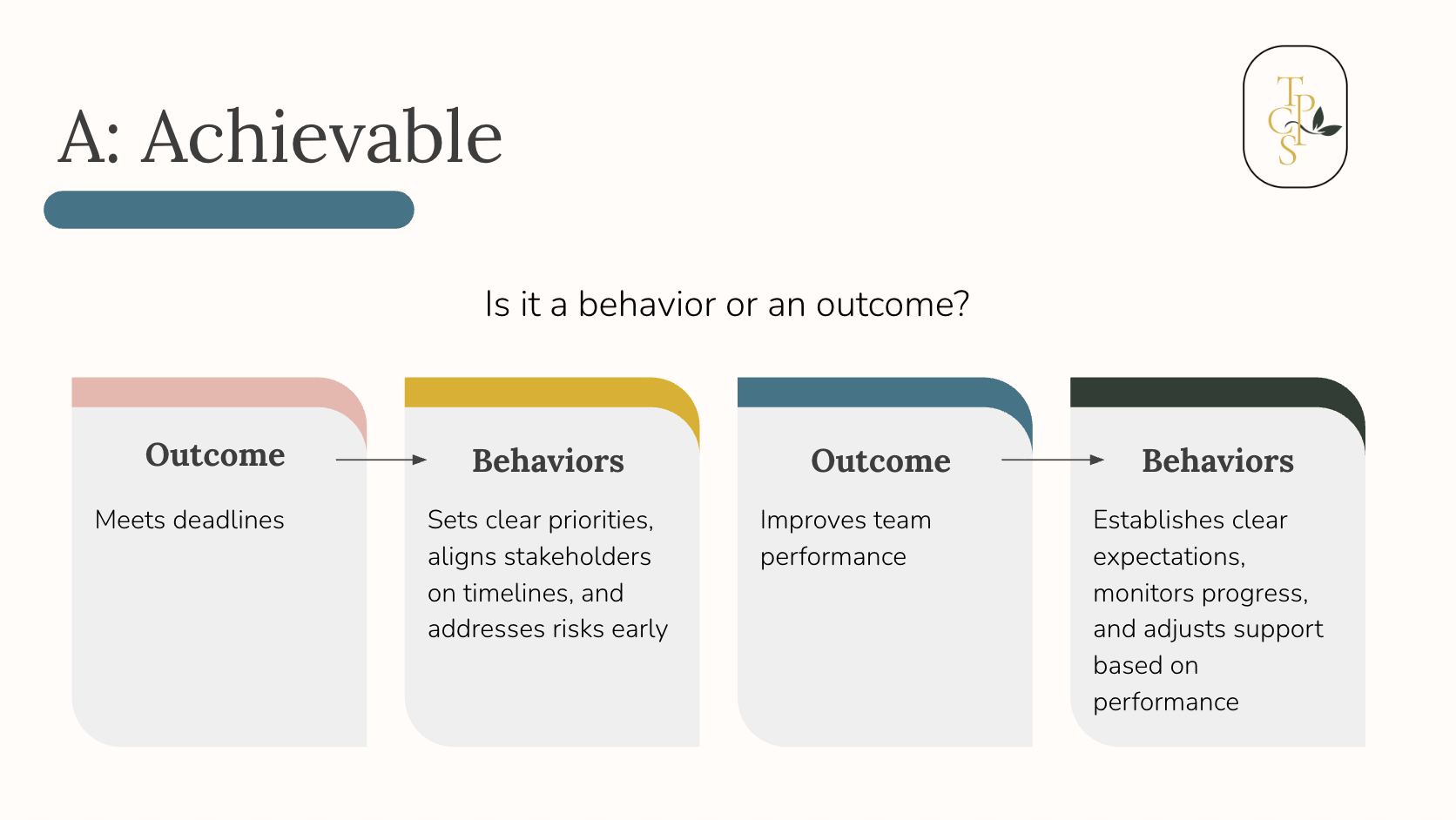
A competency describes what the leader does to influence those outcomes, such as:
Setting clear priorities
Aligning stakeholders on timelines
Monitoring progress and addressing risks early
If a leader can’t articulate how to enact the competency, it’s not yet achievable.
Relevant: What Actually Moves the Needle?
Many leadership behaviors are helpful. Relevance is about prioritization.
When everything is a competency, nothing is.
Ask:
What are the top three to five leadership behaviors that most directly support our goals right now?
This filter helps you focus on what matters most for the role and the organization.
How to Define Competencies Without Overengineering
The most common approaches to defining competencies are:
Top-down: Starting from strategy or mission
Bottom-up: Gathering broad input on effective leadership
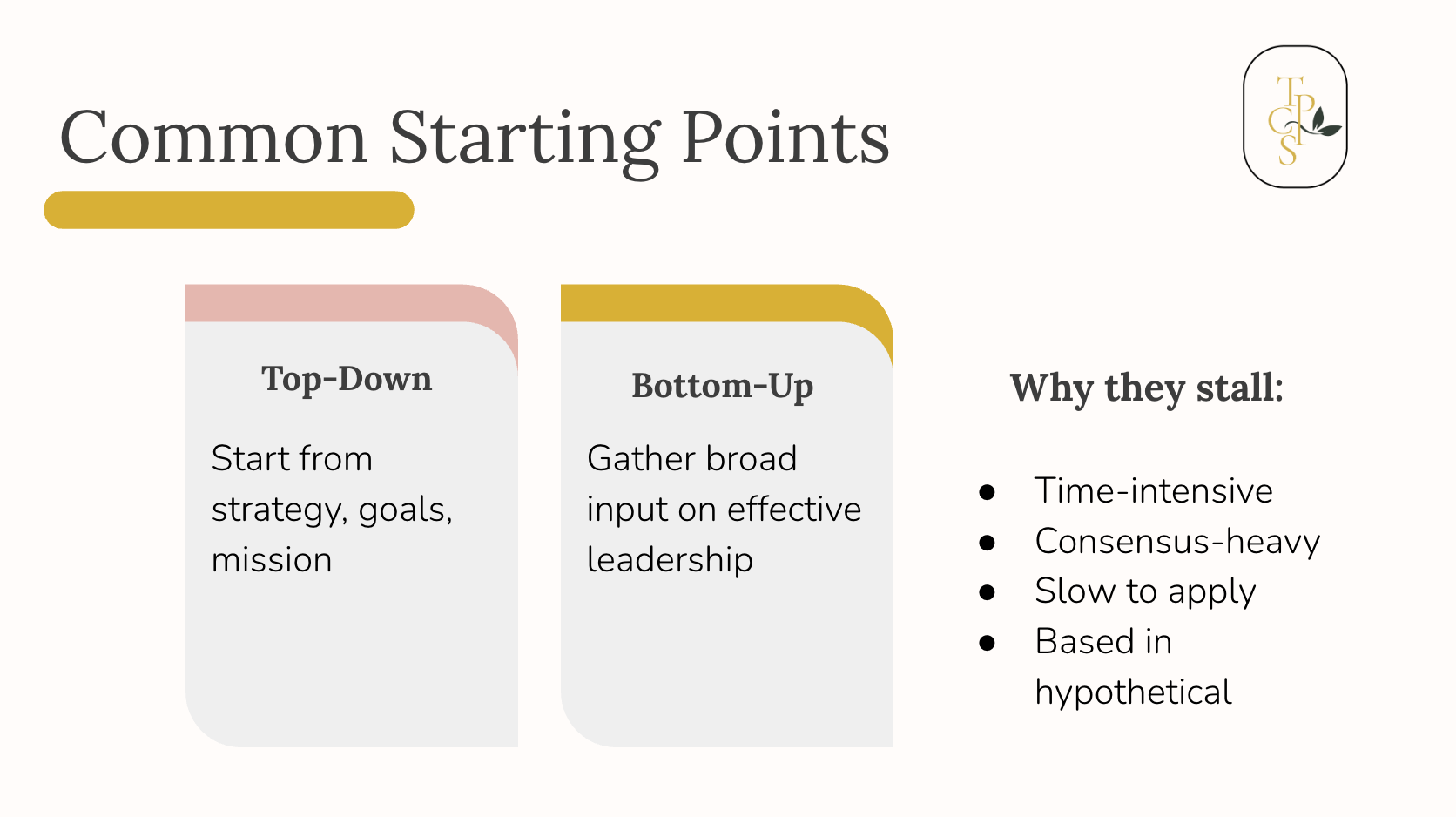
Both can work—but they’re often time-intensive, consensus-heavy, slow to apply, and based on hypothetical ideals rather than real behavior.
A More Practical Starting Point: Behavior-Based Definition
Instead of starting with what leadership should look like, start with what’s already being reinforced.
Reflect on:
2–3 top-performing leaders
2–3 leaders with more growth opportunities
Ask:
What behaviors consistently show up in successful leaders?
What behaviors are missing when leaders struggle?
Look for patterns. You may only identify one to three competencies—and that’s enough to start.
From Observation to Competencies
Once you’ve reflected on real behavior:
Look for patterns across what you observed
Group related behaviors into draft competencies
Pressure-test them using SMART
Start small and iterate
Competencies get better through use—not perfection on the first pass.
Applying Competencies: Start with Daily Use
The most common application is rolling out a formal competency framework and embedding it immediately into hiring and performance systems.
That can create clarity—but it often makes competencies feel final and static.
A better starting point is daily use.
Encourage leaders to reflect on competencies as work is happening:
When things go well: Which competencies showed up?
When things don’t go as planned: What was missing? What would we need to see instead?
When a competency shows up, call it out and reinforce it. When it’s missing, use it as a coaching and feedback conversation.
This is how competencies move from documents to decisions.
A Final Reframe
Leadership competencies aren’t about compliance or checklists.
They’re about giving leaders a clearer way to reflect, course-correct, and grow.
When used well, competencies create shared language, consistent expectations, and better leadership outcomes—without guessing.
Want support applying this?
At Talent Praxis, we help organizations define and embed leadership competencies that actually get used—through coaching, training, and system design.
If you’d like help adapting this approach to your organization, let’s talk.