Leads by Example: A Key Competency for Effective Leadership

Welcome to Monthly Best Praxis, Talent Praxis's newsletter dedicated to sharing actionable insights and proven strategies for leadership development. Each month, we dive into key topics and competencies that help leaders drive performance, align teams, and create lasting impact. In this issue, we explore how leading by example is essential for effective leadership.
Leads by Example is the competency of consistently demonstrating the behaviors, standards, and values you expect from your team. Leaders shape culture through what they do—not just what they say—making this competency foundational to trust, accountability, and performance.
Culture is ultimately a set of norms—how work gets done and how people behave—at the individual, 1:1, team, systems, processes, and organizational levels. The most effective way to shape culture is to start with your own behaviors. What you model becomes what is repeated.
A leader is only a leader if others choose to follow. The easiest way for people to follow is through visible, consistent action. When your behaviors align with your verbal, tonal, and written communication, you create clarity and credibility—making it easier for others to trust, adopt, and reinforce the same standards.
Achieving Success Through a Combination of Skills, Attributes, and Experience
Leads Change Effectively- Navigates and drives organizational change to achieve results.
Below are examples of skills, attributes, and experiences that support the potential for the competency. Infinite combinations of strengths in various skills, attributes, and experiences can generate success in this competency.
Examples of skills supporting:
Self-Awareness – Understands how their actions and behaviors are perceived and intentionally adjusts to reinforce desired standards.
Emotional Intelligence – Manages reactions and models appropriate responses, especially in high-pressure or ambiguous situations.
Consistency and Follow-Through – Demonstrates reliability by aligning actions with expectations, reinforcing clarity and trust over time.
Examples of attributes supporting:
Authentic – Behaves in a way that is aligned with stated values, creating credibility and trust.
Accountable – Takes ownership of actions and outcomes, setting the expectation that others do the same.
Intentional – Acts with purpose, recognizing that behaviors are always being observed and replicated.
Examples of experience supporting:
Leading Through Ambiguity – Demonstrates steady, values-aligned behavior when direction is unclear, setting the tone for others.
Building and Reinforcing Team Norms – Experience shaping team behaviors through consistent modeling in day-to-day interactions.
Managing Performance and Accountability – Holds self and others to clear standards, reinforcing expectations through action, not just direction.
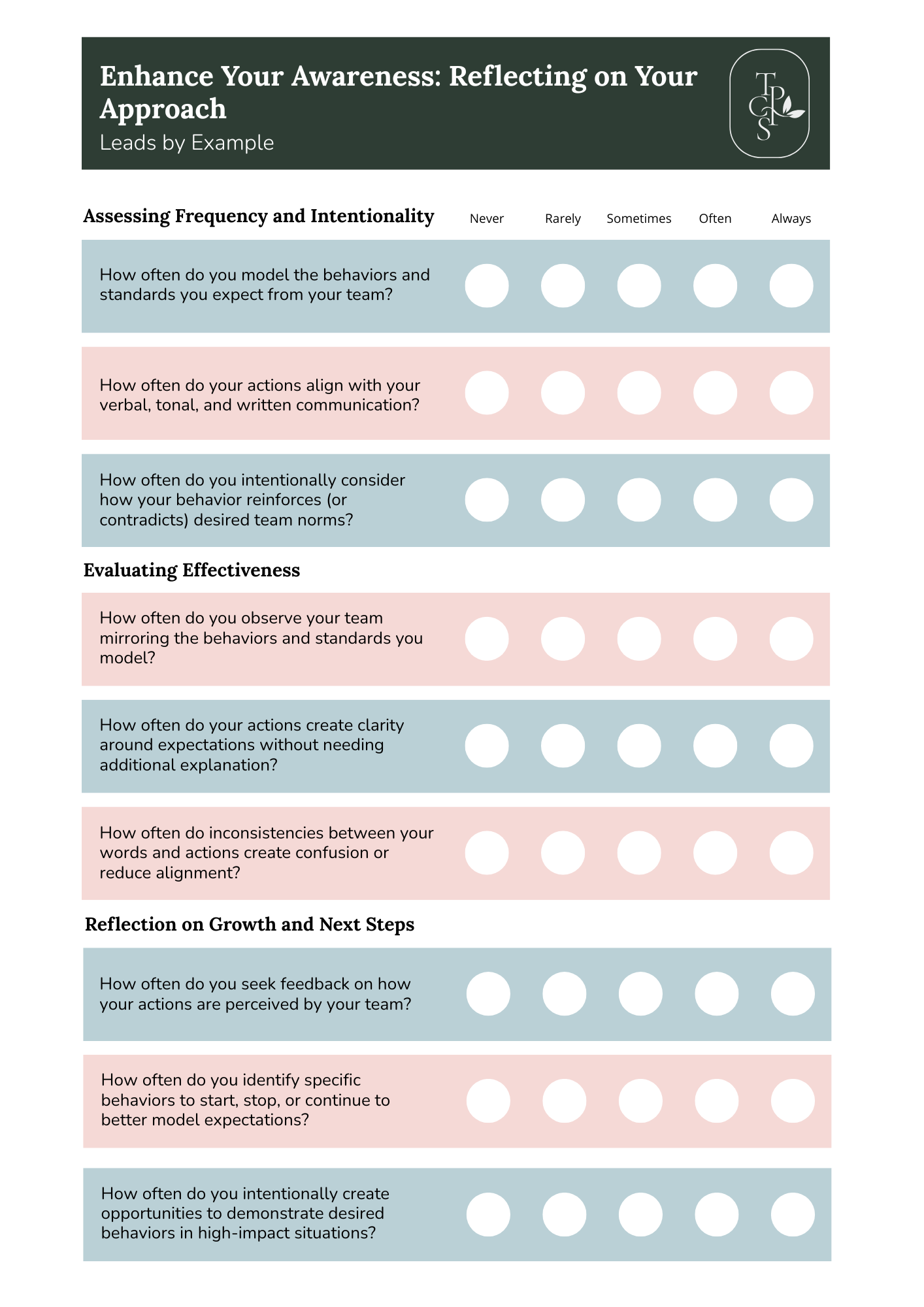
A self-assessment worksheet for leaders to reflect on how effectively they lead by example, using a scale from "Never" to "Always."
Practical Steps for Leaders to Develop This Competency
Be explicit about the behaviors you expect—and define how you will model them. If you expect accountability, demonstrate ownership in your own work. If you expect responsiveness, show it in how you communicate. Start by identifying 2–3 key behaviors that matter most and commit to consistently demonstrating them.
Audit your alignment across communication channels. Review how your actions, tone in conversations, and written messages reinforce (or contradict) each other. Look for gaps—these inconsistencies are often where trust and clarity break down.
Use high-visibility moments intentionally. Team meetings, decision-making discussions, and challenging situations are where your behavior is most observed. Prepare in advance: how do you want to show up, and what standard are you reinforcing?
Close the loop with accountability—starting with yourself. When expectations are missed, address them consistently and hold yourself to the same (or higher) standard. This reinforces that the behaviors are real, not optional.
Seek and act on feedback about your impact. Ask your team or peers how your actions are perceived and where there may be gaps. Use this input to adjust quickly—small behavioral shifts, consistently applied, have an outsized impact on culture.
Common Challenges and How to Overcome Them
Saying the right things but not consistently modeling them
Leaders communicate expectations clearly but don’t consistently reinforce them through their own actions, creating confusion and eroding trust.
Overcome it: Identify 2–3 critical behaviors and track your consistency daily. Ensure your actions visibly reinforce what you’ve communicated—especially in routine interactions..
—-
Only modeling behaviors in high-visibility moments
Leaders show up strongly in big meetings or presentations but are inconsistent in day-to-day interactions, where culture is actually built.
Overcome it: Treat every interaction—1:1s, quick messages, small decisions—as culture-shaping moments. Consistency in small actions builds stronger norms than occasional peak performance.
—-
Misalignment across communication channels
A leader’s tone in meetings, written communication, and actions don’t fully align, leading to mixed signals and reduced clarity.
Overcome it: Regularly review how your message is coming across in different formats. Ask: “If someone only observed my actions, what would they believe matters most?”
—-
Avoiding accountability for themselves
Leaders hold others accountable but make exceptions for their own behavior, weakening credibility and standards.
Overcome it: Publicly own mistakes and gaps. Model accountability first—this sets the expectation that standards apply to everyone.
—-
Connecting to Other Leadership Competencies
Leads Change Effectively reinforces several other leadership competencies by ensuring that change translates into consistent execution and results. It builds on Thinks and Works Strategically by anticipating when change is needed and aligning it to broader priorities, and Shares Information Effectively by creating clarity and reducing uncertainty throughout the process. It also strengthens Builds Trust and Relationships and Shapes a High-Performance Culture, as leaders who guide change well create environments where teams stay engaged, adaptable, and focused even during disruption.
Apply Your Learnings
Identify one behavior you expect from your team that you are not consistently modeling today, and commit to demonstrating it daily.
Choose one upcoming meeting or interaction and define in advance how you will model the standards you want your team to adopt.
Review a recent situation where there was misalignment or confusion, and assess how your actions may have reinforced or contradicted expectations.
Ask one team member or peer for direct feedback on how your behaviors are perceived and where you may be unintentionally sending mixed signals.
Select one team norm or value and intentionally reinforce it through your actions over the next week, observing how your team responds.
Explore More
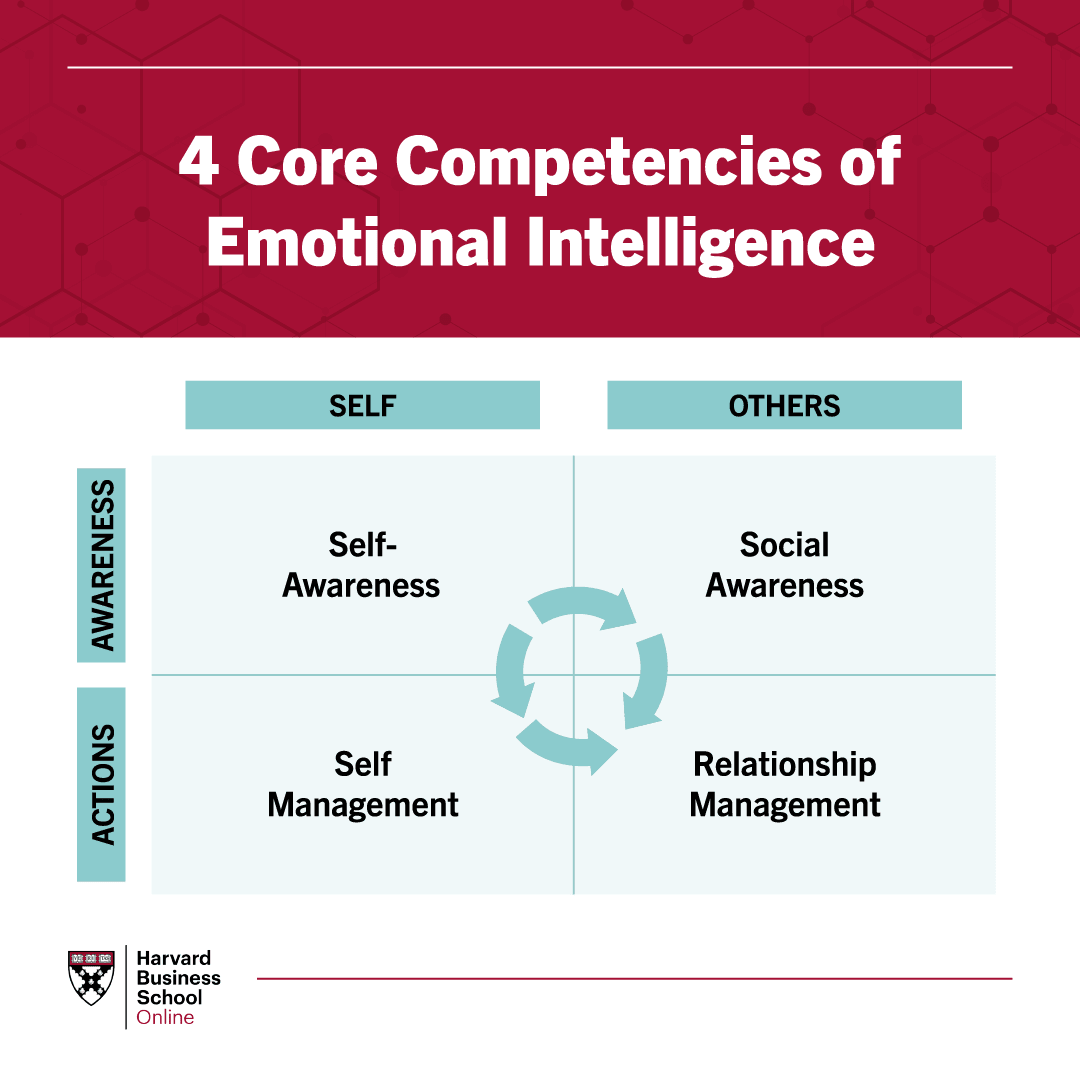
A foundational resource on emotional intelligence, with a useful focus on self-awareness, self-management, empathy, and how leaders’ behaviors impact team performance.
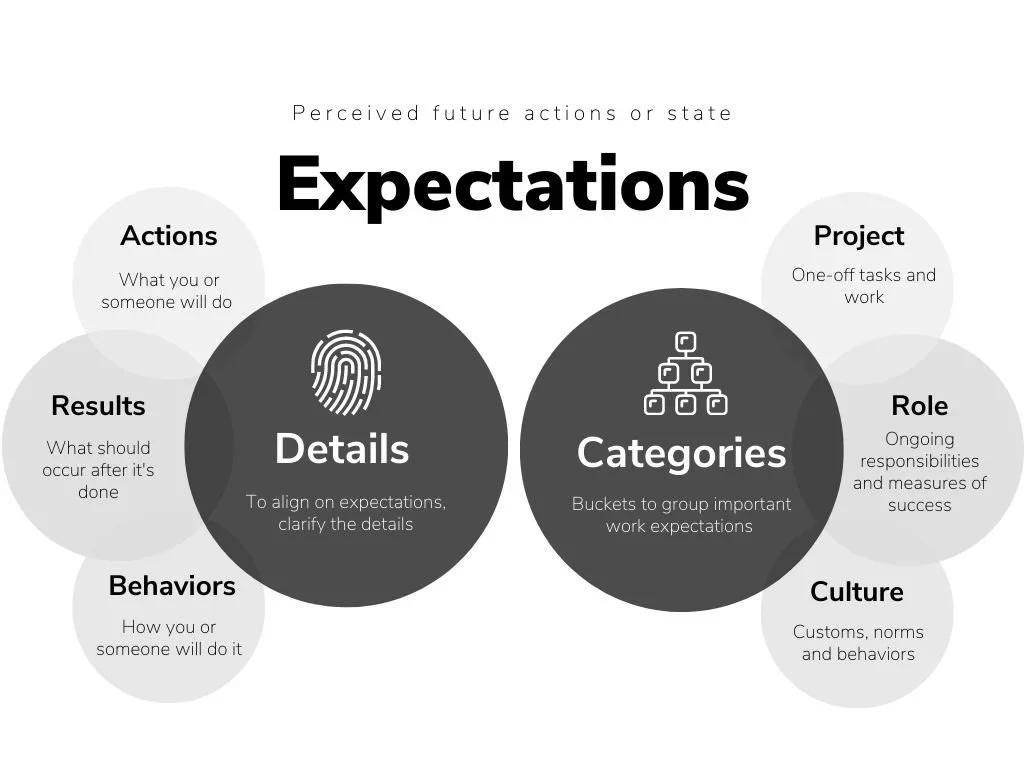
A practical tool to define and communicate expectations across roles, projects, and culture. It helps leaders translate values into clear actions, behaviors, and results—ensuring what you model is explicitly understood and repeatable.
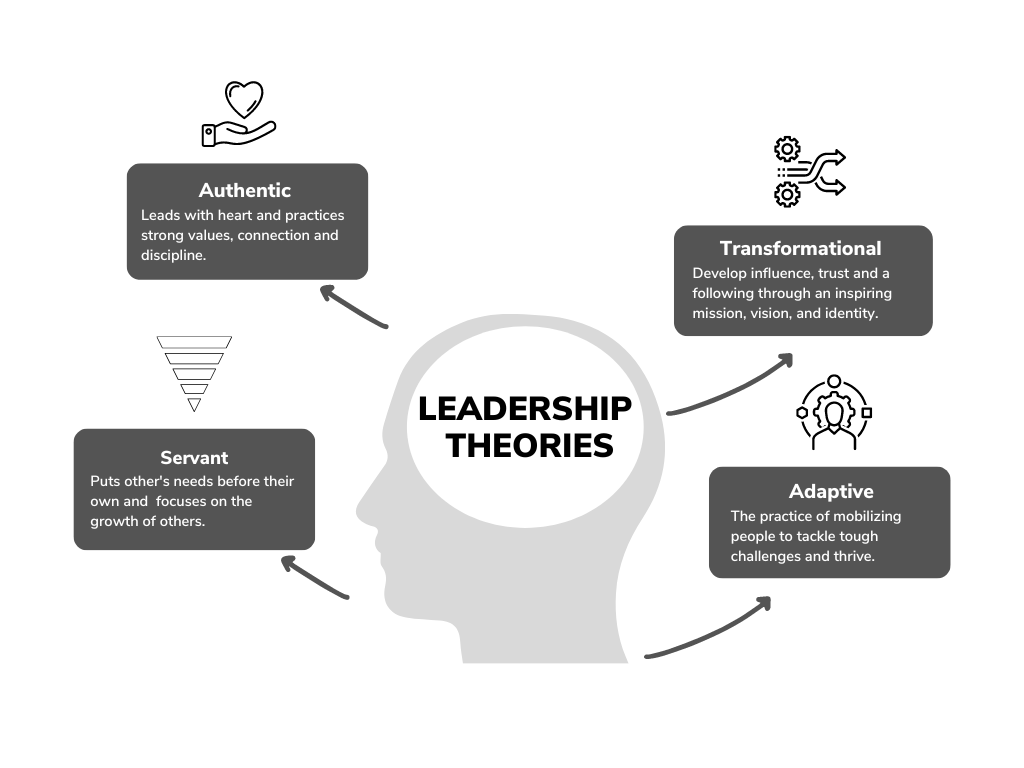
Builds the foundation for leading by example by helping leaders clarify their values, motivations, and leadership style. When values are clearly defined, it becomes significantly easier to consistently model the behaviors you expect from others.
Build Leadership Capability Across Your Organization
If you’re looking to go beyond individual competencies and build a consistent, scalable approach to leadership, explore our Leadership Capability Series. This program helps organizations define, develop, and embed the leadership behaviors that drive performance, alignment, and long-term success.
Leadership Capability Series
A structured approach to building leadership competencies across your organization—linking strategy, development, and execution.
Latest Event: Beyond the Fire Drill
How HR & L&D Can Coach People Leaders to Think and Lead Strategically
Help leaders step out of reactive execution mode and lead with intention, alignment, and clarity.
About Talent Praxis
Cultivating Leadership Impact
Our work at Talent Praxis focuses on helping senior leaders identify the strategic behaviors that drive success, so they can lead with greater confidence, clarity, and impact. We partner with organizations to design custom leadership development programs that integrate executive coaching, assessments, and training, delivering measurable results and elevating leadership effectiveness.
Why custom leadership development programs?
Leaders define the direction and culture of an organization. Leadership development programs result in:
Increased Productivity and Performance
Higher Employee Engagement and Retention
Improved Financial Performance
As your company and market evolve, so must your leadership. Our custom leadership development programs are designed to meet your organization’s unique needs, empowering leaders with the skills to drive engagement, foster success, and deliver measurable results.